
E-commerce UX / Shopify
The Sustainable Sequin Company


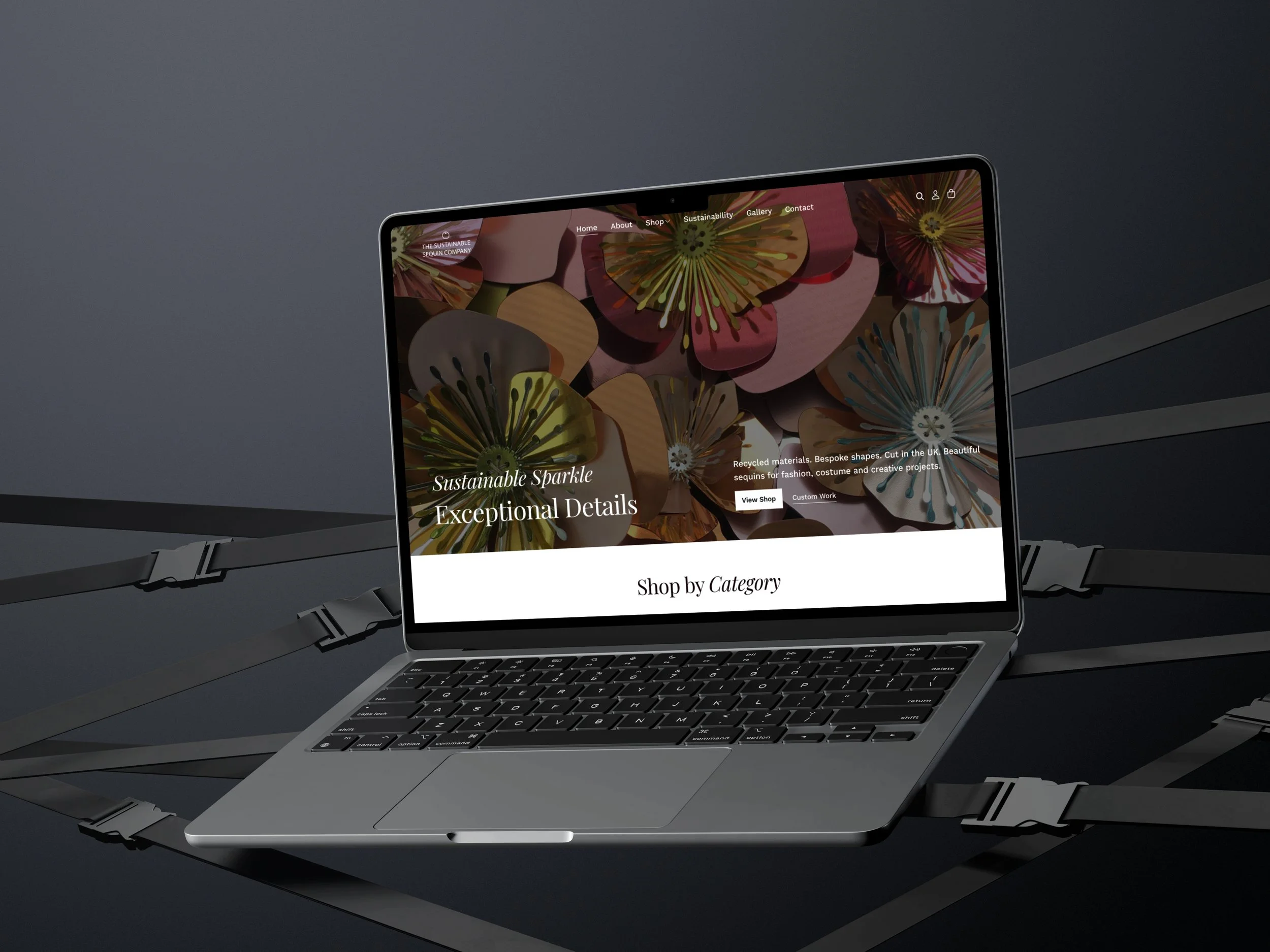
A UX-led redesign and digital transformation of a sustainable sequin e-commerce business, combining user research, information architecture, usability testing and Shopify development to create a clearer, more confident shopping experience.
Project Overview
Role: UX/UI Designer & Shopify Developer
Duration: 16 weeks
Project: MSc UX Major Project / Real Business Internship
Tools: Figma, FigJam, Notion, Shopify, Codex, Cloudflare
Methods: UX Audit, Surveys, Interviews, Affinity Mapping, Personas, Journey Mapping, Card Sorting, Usability Testing
Outcome: Research-led redesign implemented and launched as a live Shopify e-commerce store
The Sustainable Sequin Company (TSSC) specialises in recycled and biodegradable sequins and embellishments for fashion designers, costume makers, embroiderers and independent makers.
The project went beyond a visual redesign. The goal was to understand where customers struggled across the existing shopping journey and transform those findings into a new e-commerce experience that could also work within the operational requirements of a real business.
The Challenge
TSSC already had a distinctive sustainability proposition and specialist product range, but its digital experience made those strengths difficult to discover.
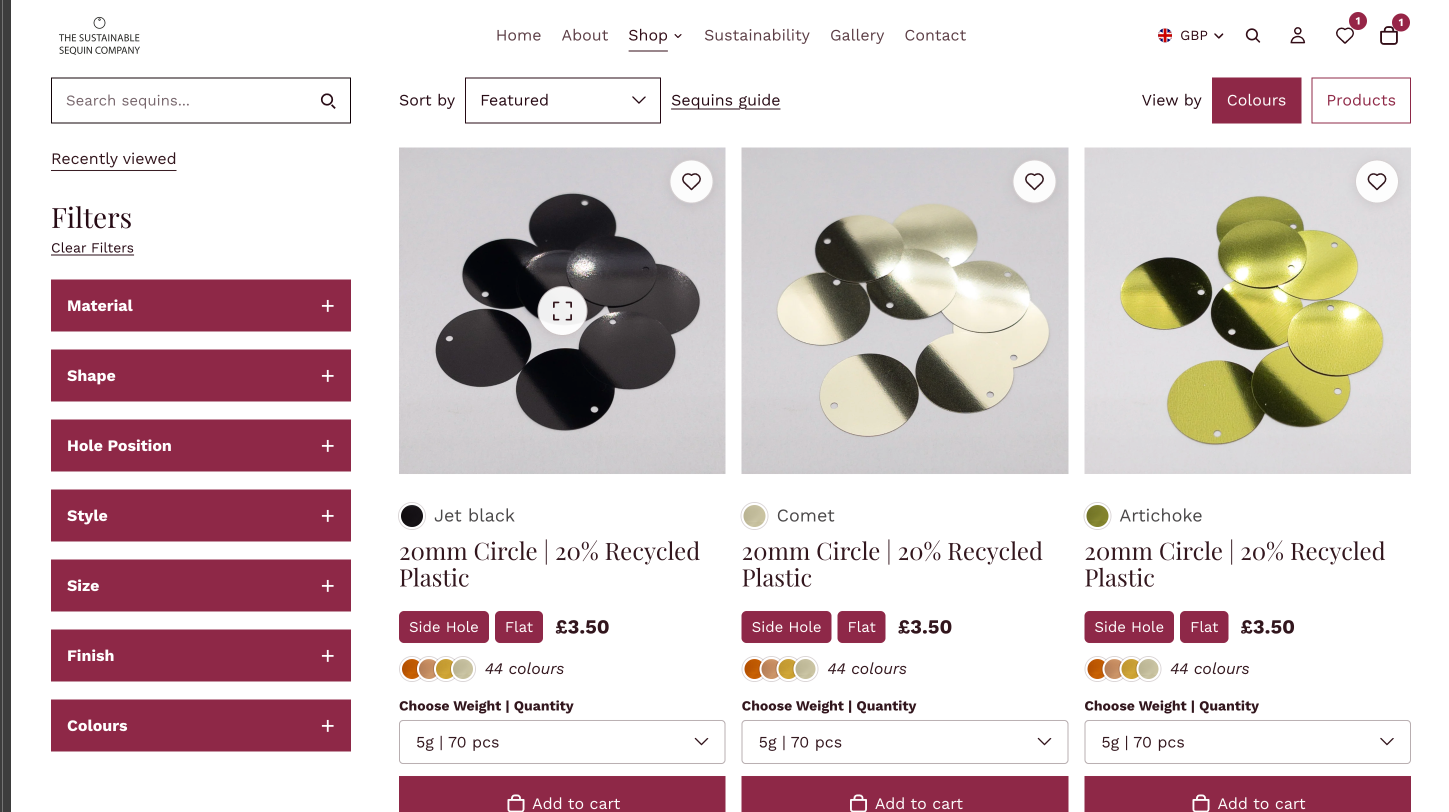
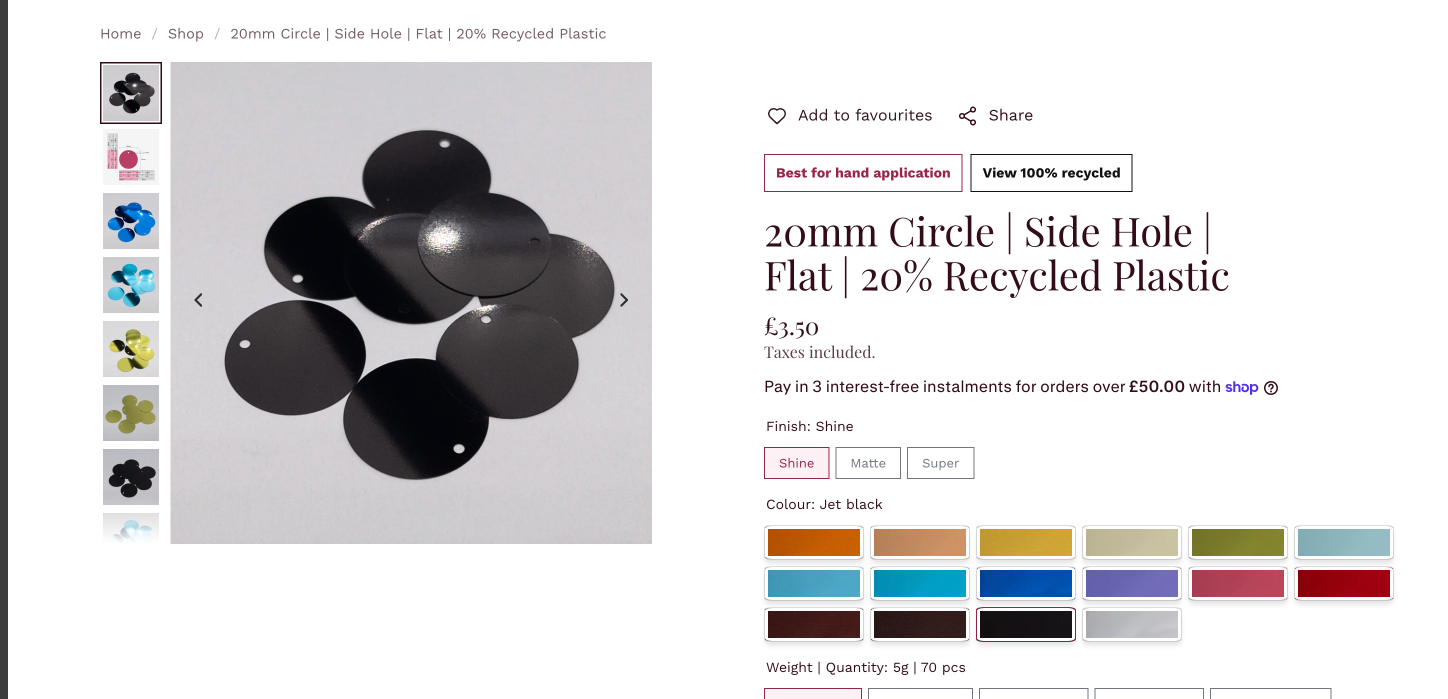
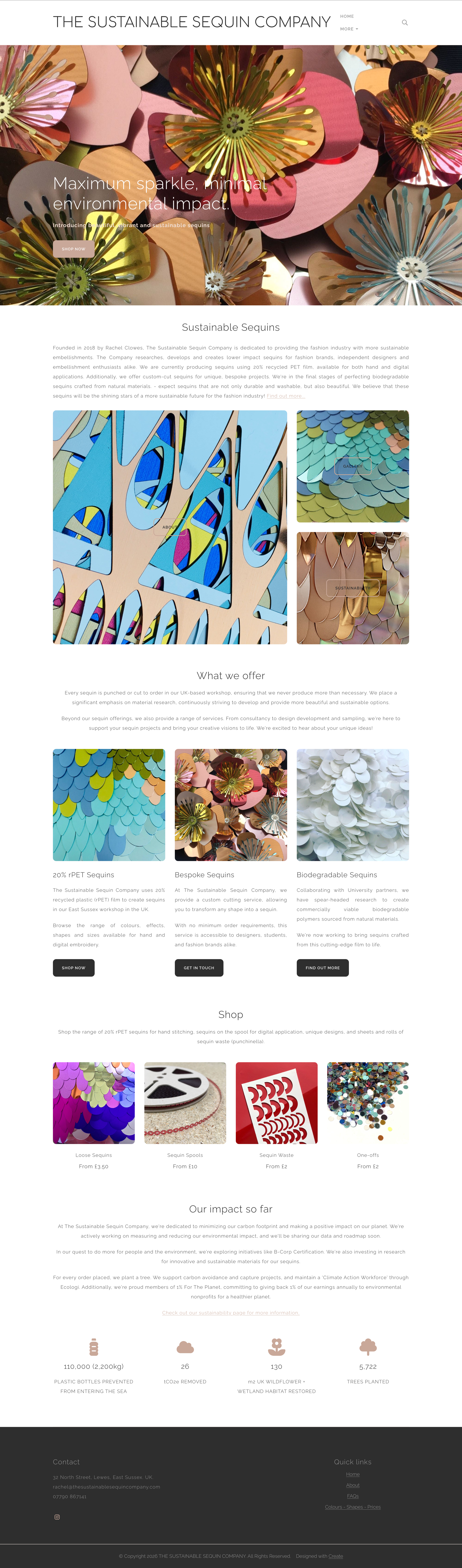
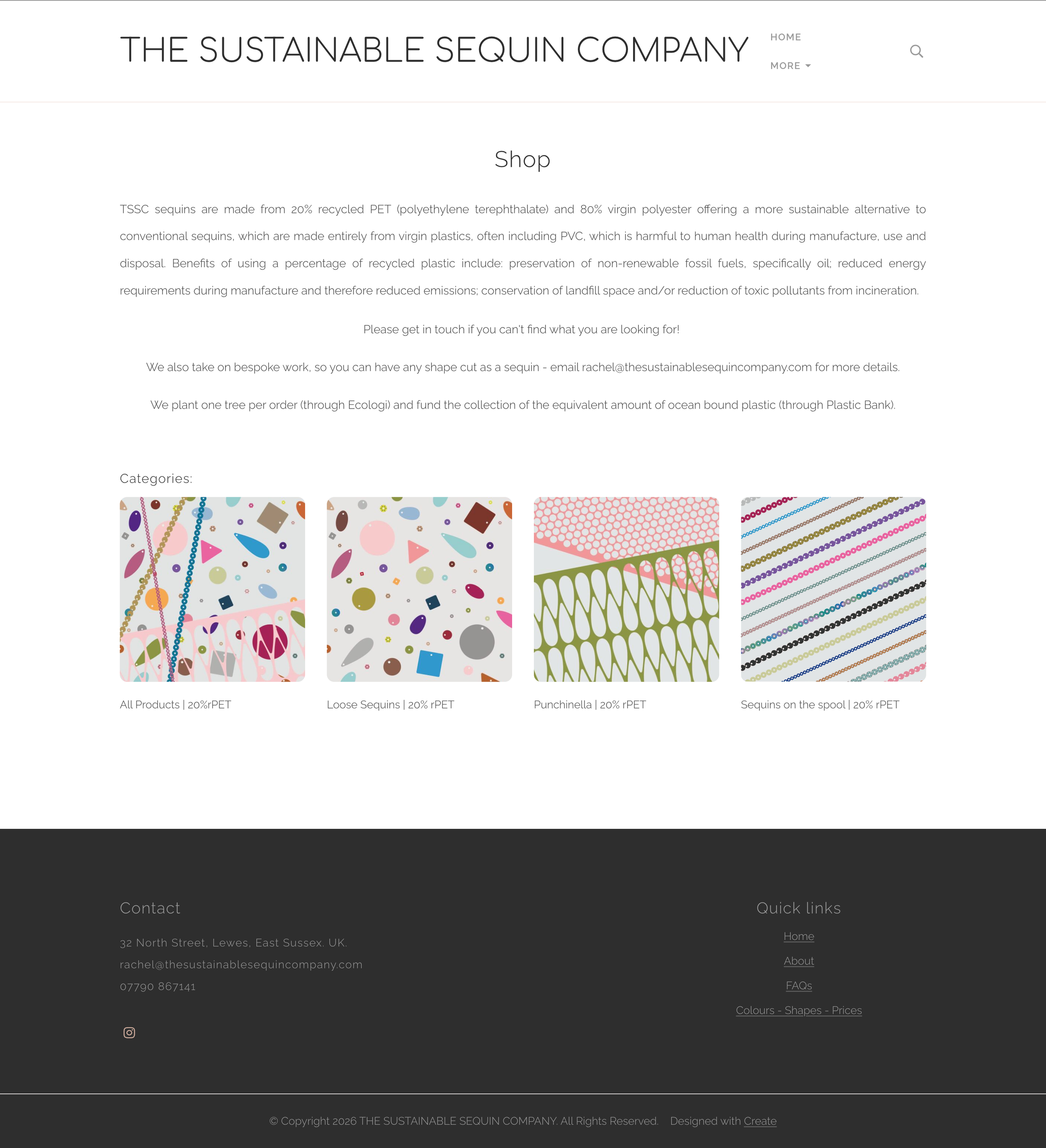
An initial UX audit identified issues including a broken search experience, limited filtering, unclear quantities, inconsistent navigation, weak basket visibility and difficulty browsing products. The challenge was therefore:
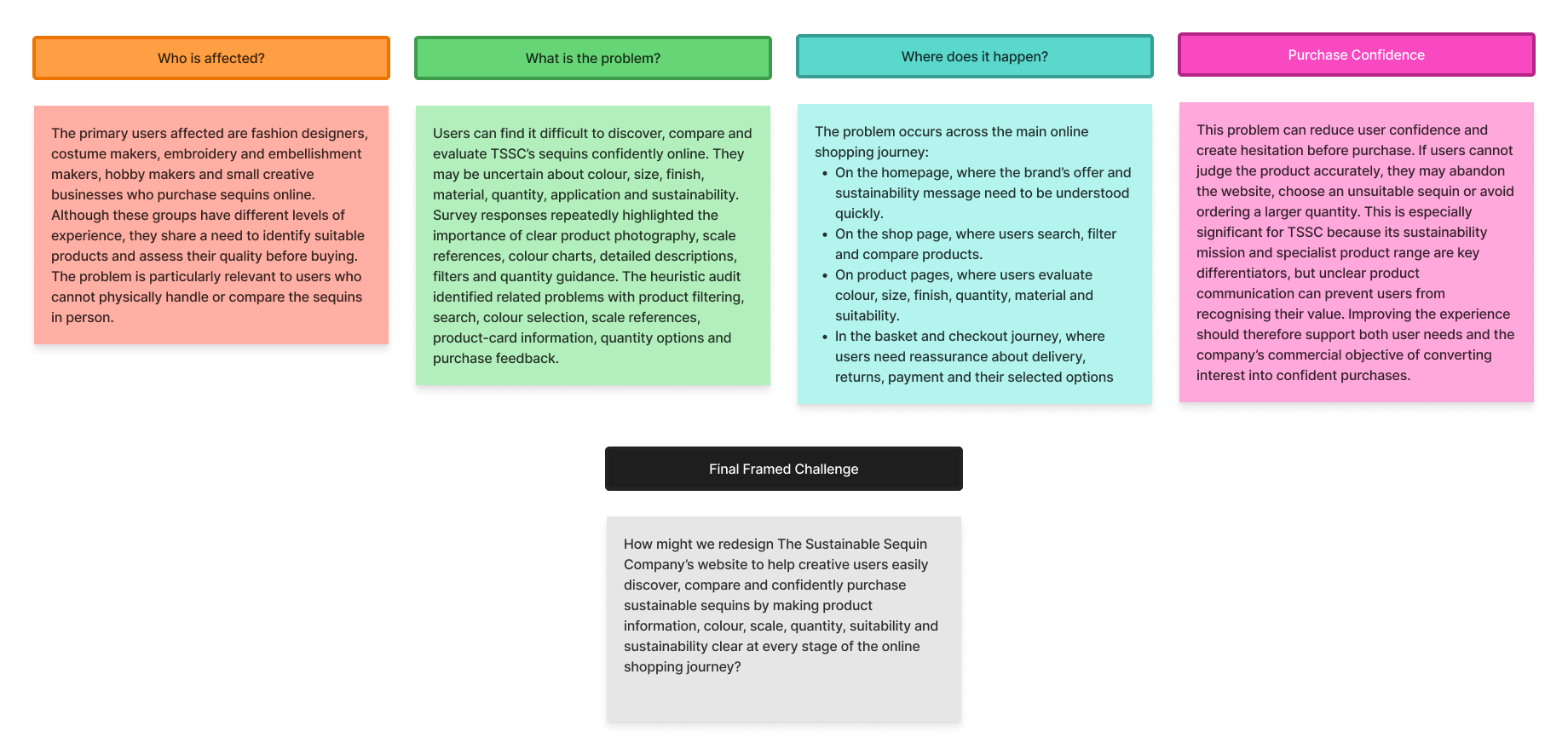
How might we create an e-commerce experience that makes specialist sustainable products easier to discover, understand and purchase with confidence?
The redesign needed to balance three things: user needs, TSSC's sustainability story, and the operational requirements of a functioning e-commerce business.
My Role
I led the project across the complete UX and implementation process, taking the redesign from initial research through to the live Shopify store.
Audited the existing website and Etsy shopping experience.
Conducted surveys and semi-structured user interviews.
Synthesised research through affinity mapping, empathy mapping, personas and journey mapping.
Developed the information architecture and validated it through card sorting.
Explored solutions through brainwriting, prioritisation and iterative design.
Designed the e-commerce experience in Figma.
Planned and conducted two rounds of usability testing.
Iterated the interface based on user behaviour and feedback.
Built and configured the final experience in Shopify.
Worked on product structure, inventory, shipping, international markets and SEO.
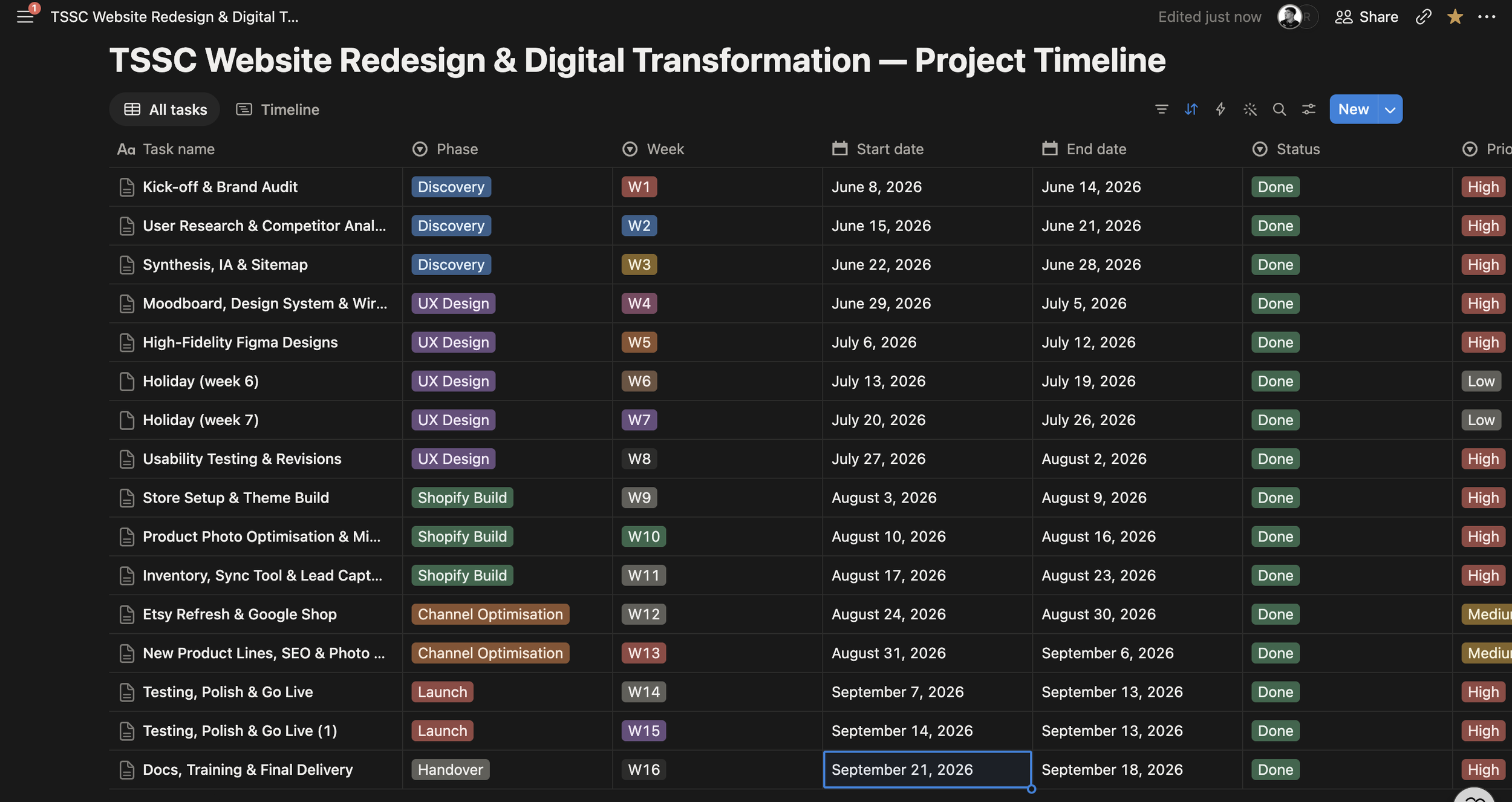
The project was managed over a structured 15-week programme covering research, UX design, implementation, optimisation, launch and handover.
Research Highlights
Rather than beginning with interface solutions, I first investigated the existing customer experience from multiple perspectives.
Research combined a website and Etsy audit, stakeholder input, competitor analysis, two surveys and user interviews. This allowed business assumptions to be compared against actual user needs. IDM90 Assessment
UX Audit
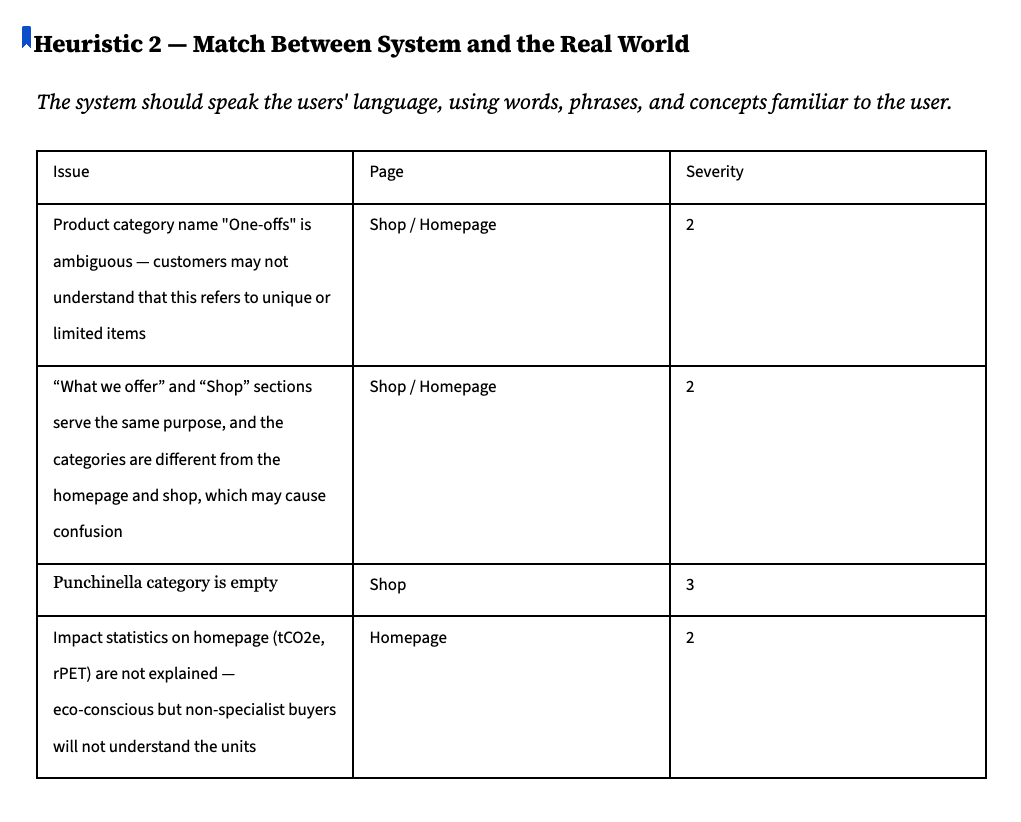
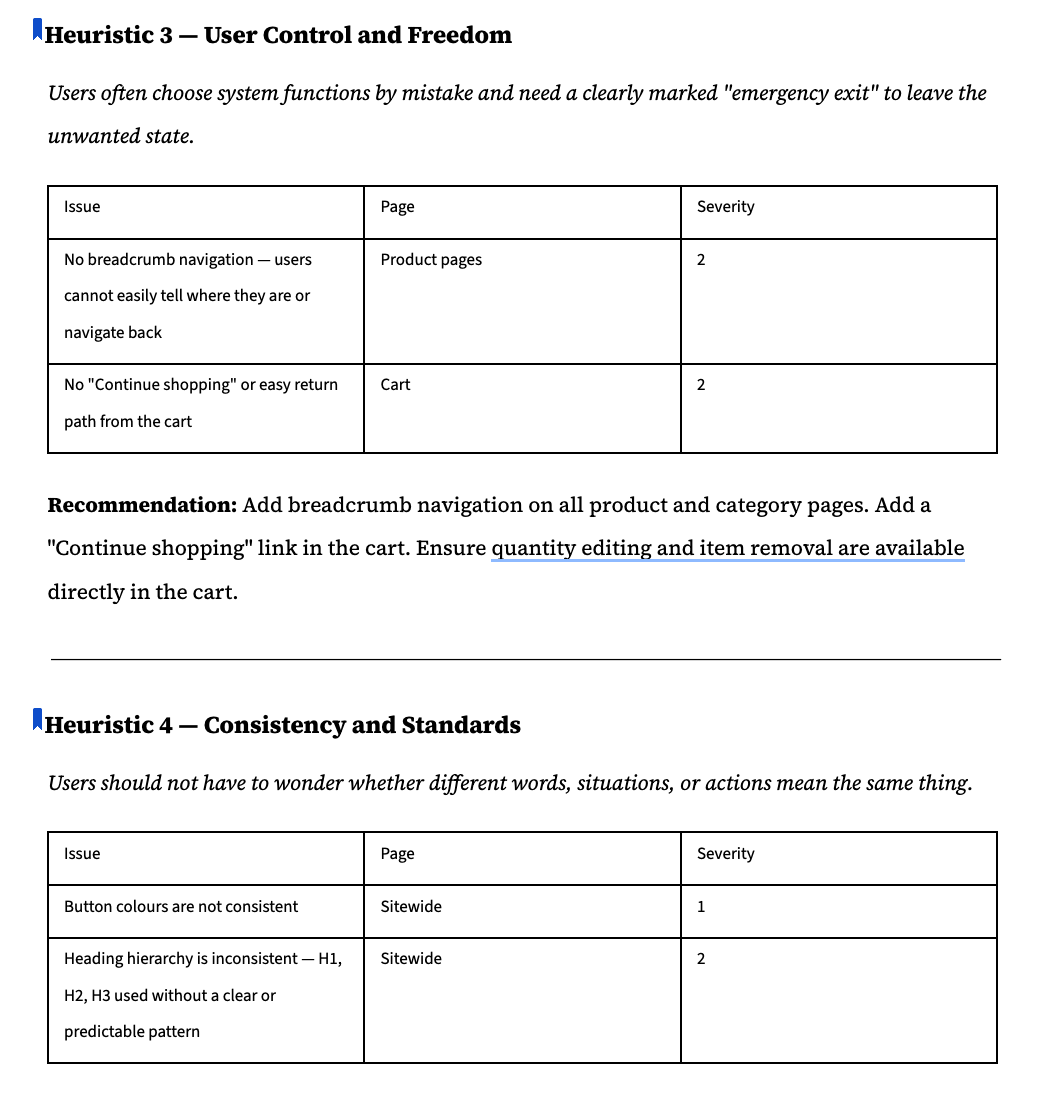
The audit revealed recurring problems around:
Product discovery: search and filtering made finding relevant products difficult.
Product clarity: users needed clearer quantities, sizing, colour representation and imagery.
Navigation: overlapping terminology and categories made the store harder to understand.
Trust: TSSC's expertise, sustainability credentials and customer proof were not prominent enough.
User Research
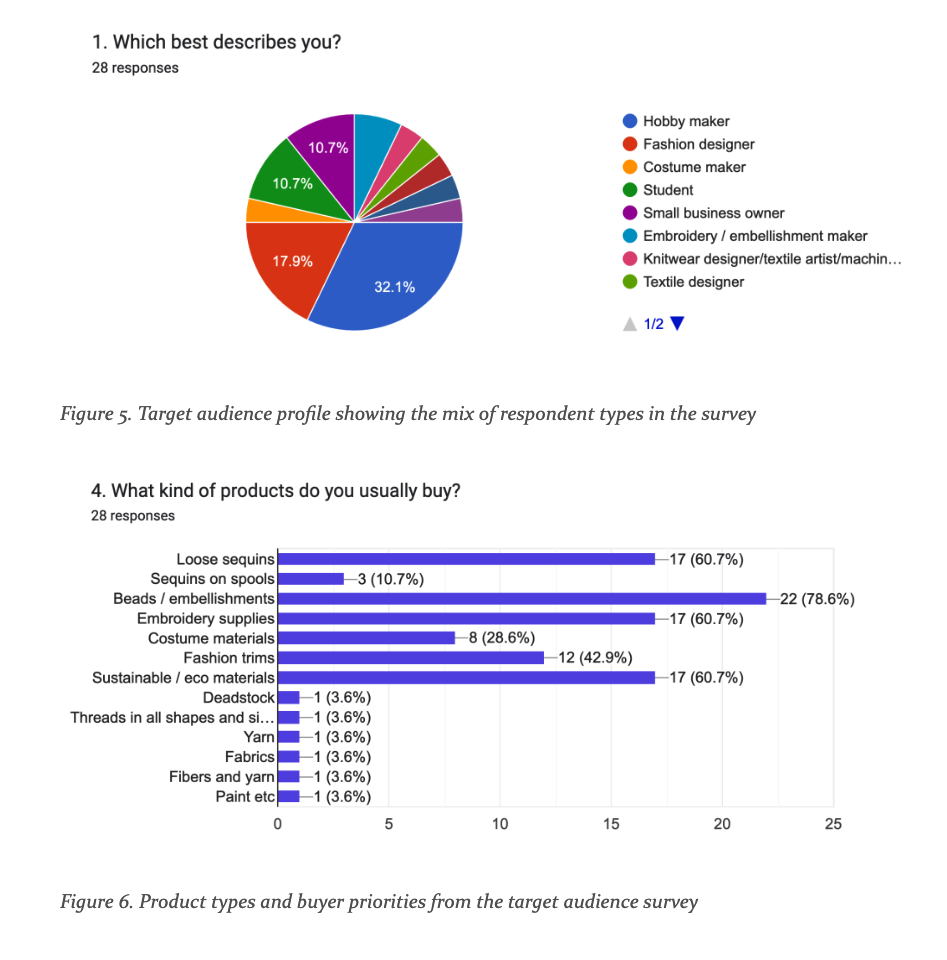
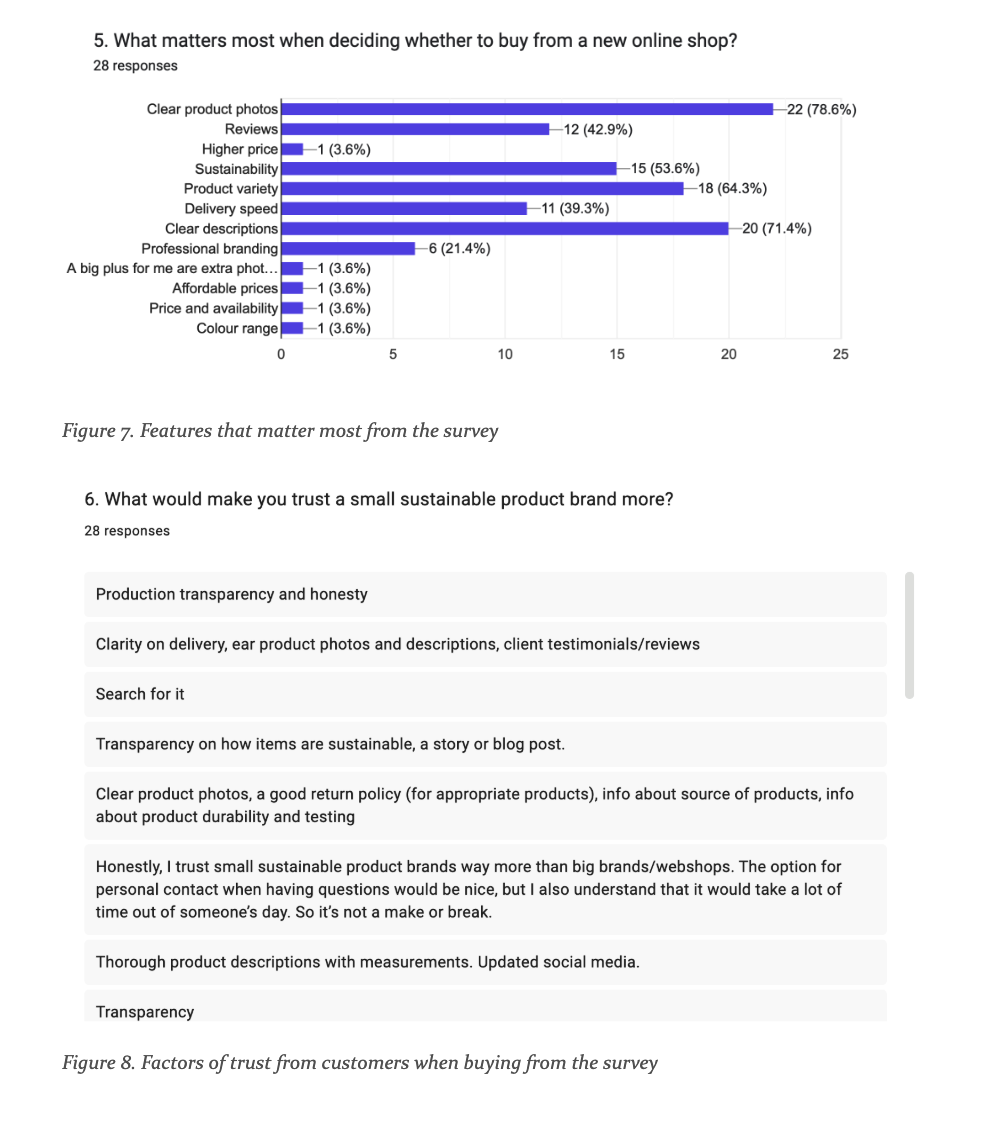
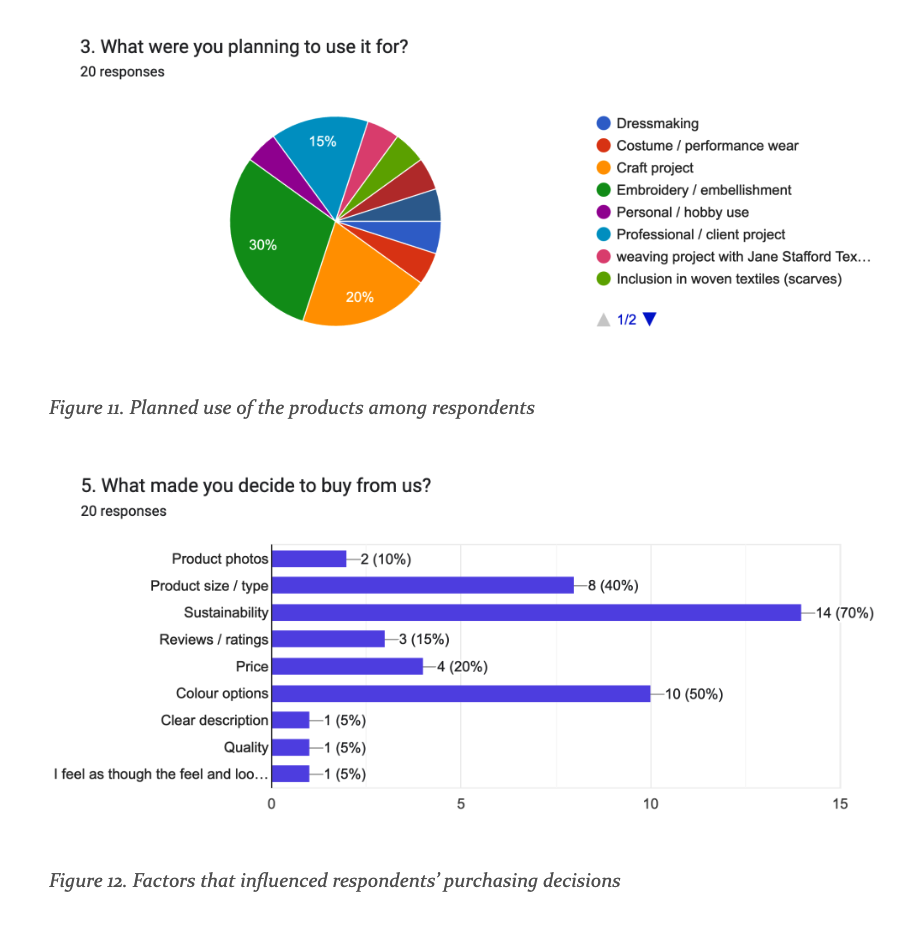
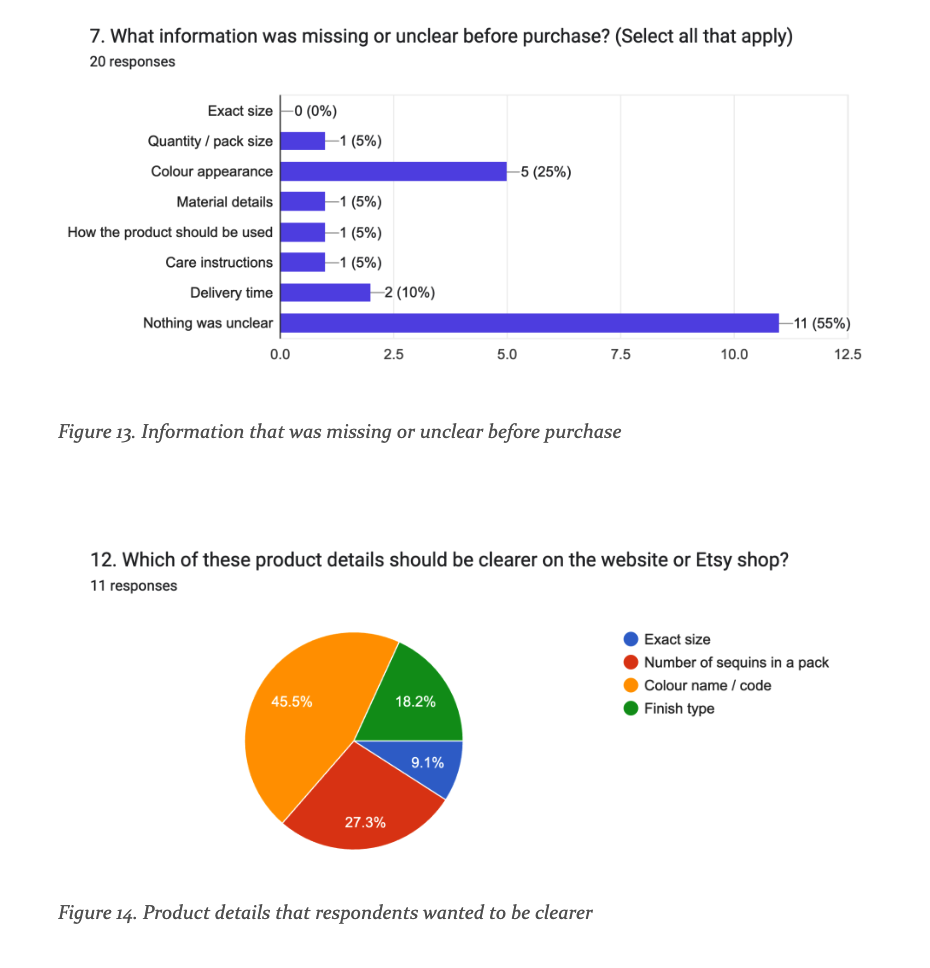
Two surveys explored both potential customers and people who had previously purchased from TSSC, while interviews provided deeper insight into the reasons behind their behaviour.
Users repeatedly prioritised clear product photography, colour swatches, scale references, detailed descriptions, filtering, search and clearer categories. Trust was also strongly connected to transparent sustainability information, professional presentation and evidence of product quality. IDM90 Assessment
Target audience survey
Past customers survey
User interviews
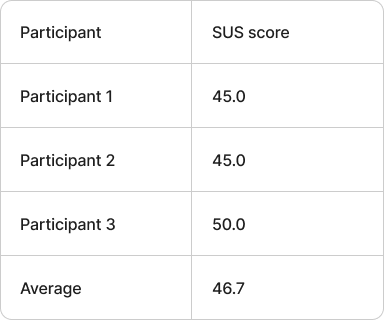
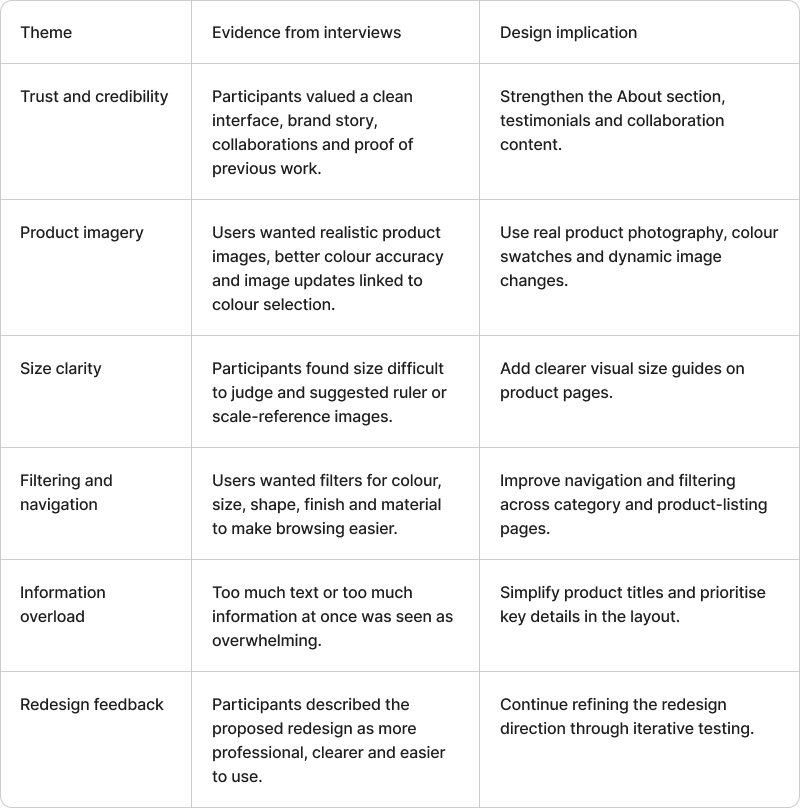
Key Insights
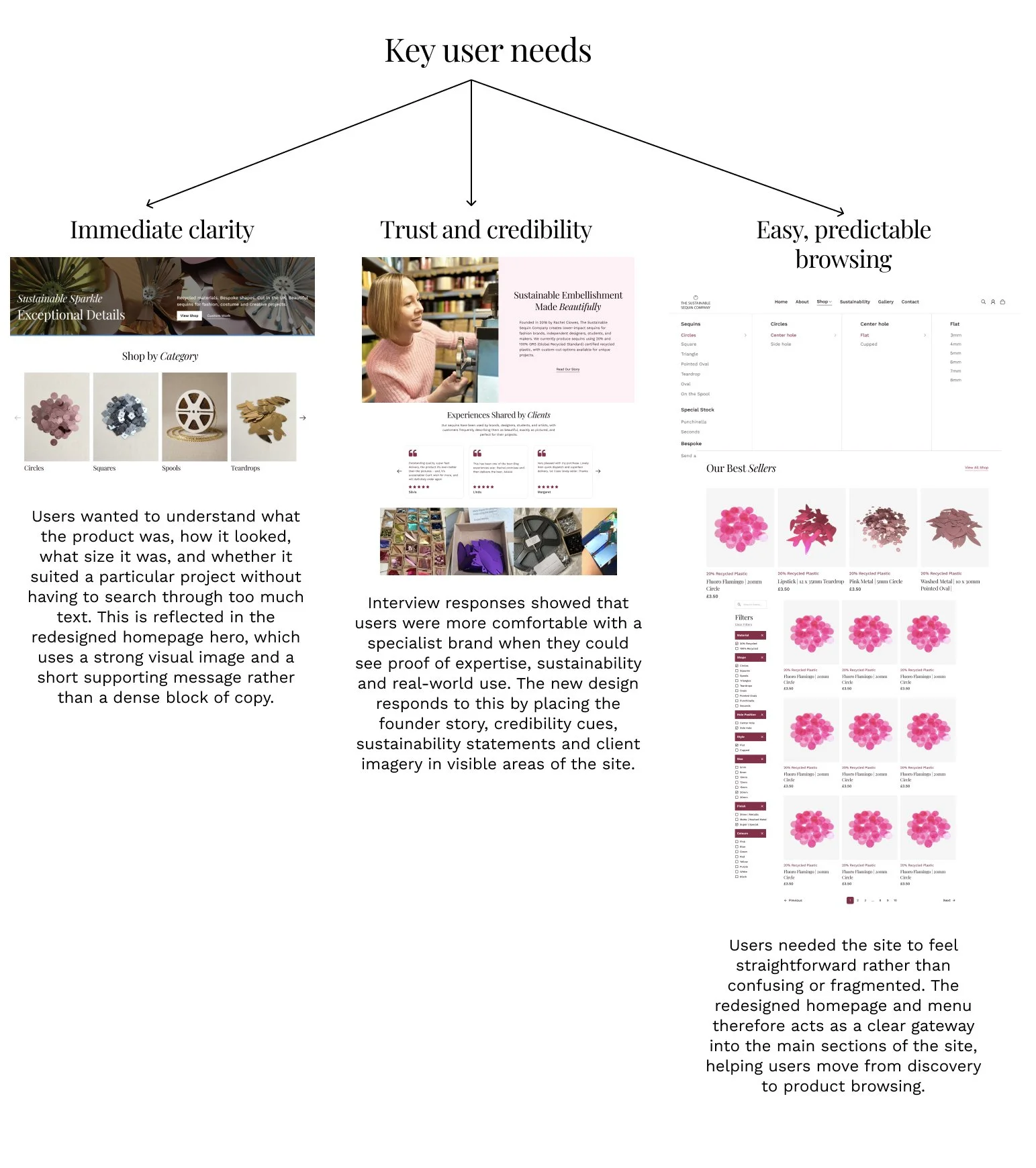
📌 Users needed immediate product clarity.
Size, colour, quantity and material information needed to be understandable without excessive reading.
📌 Product imagery directly affected purchasing confidence.
Users wanted accurate colours, scale references and imagery showing products in context.
📌 Browsing needed to feel predictable.
Clear categories, search, filters and consistent navigation were essential for a large specialist catalogue.
📌 Sustainability needed evidence, not just claims.
Users wanted to understand what materials were sustainable and why.
📌 Trust extended beyond the product page.
The founder's story, collaborations, previous work and professional presentation contributed to confidence in the business.
Defining the Users
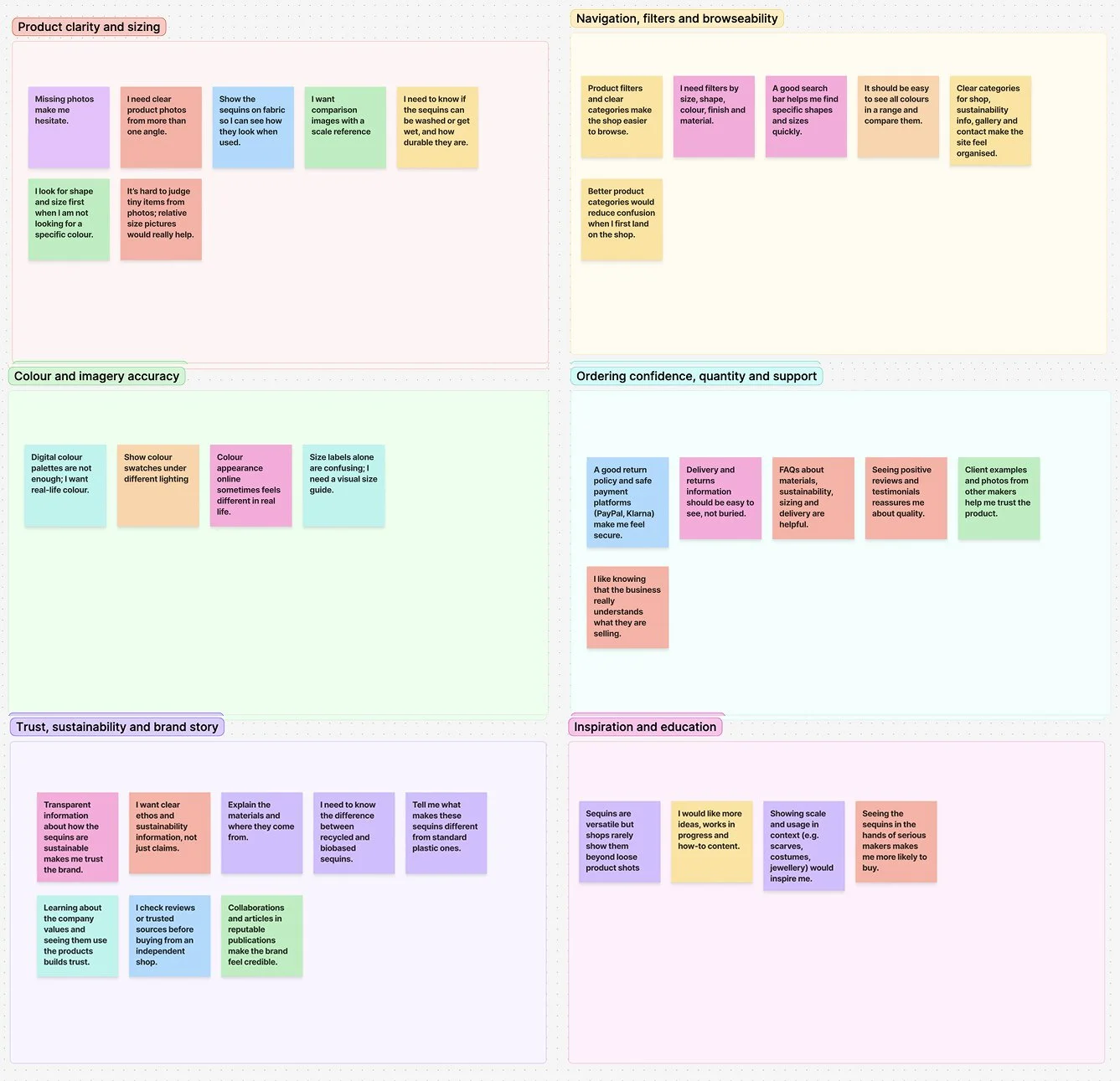
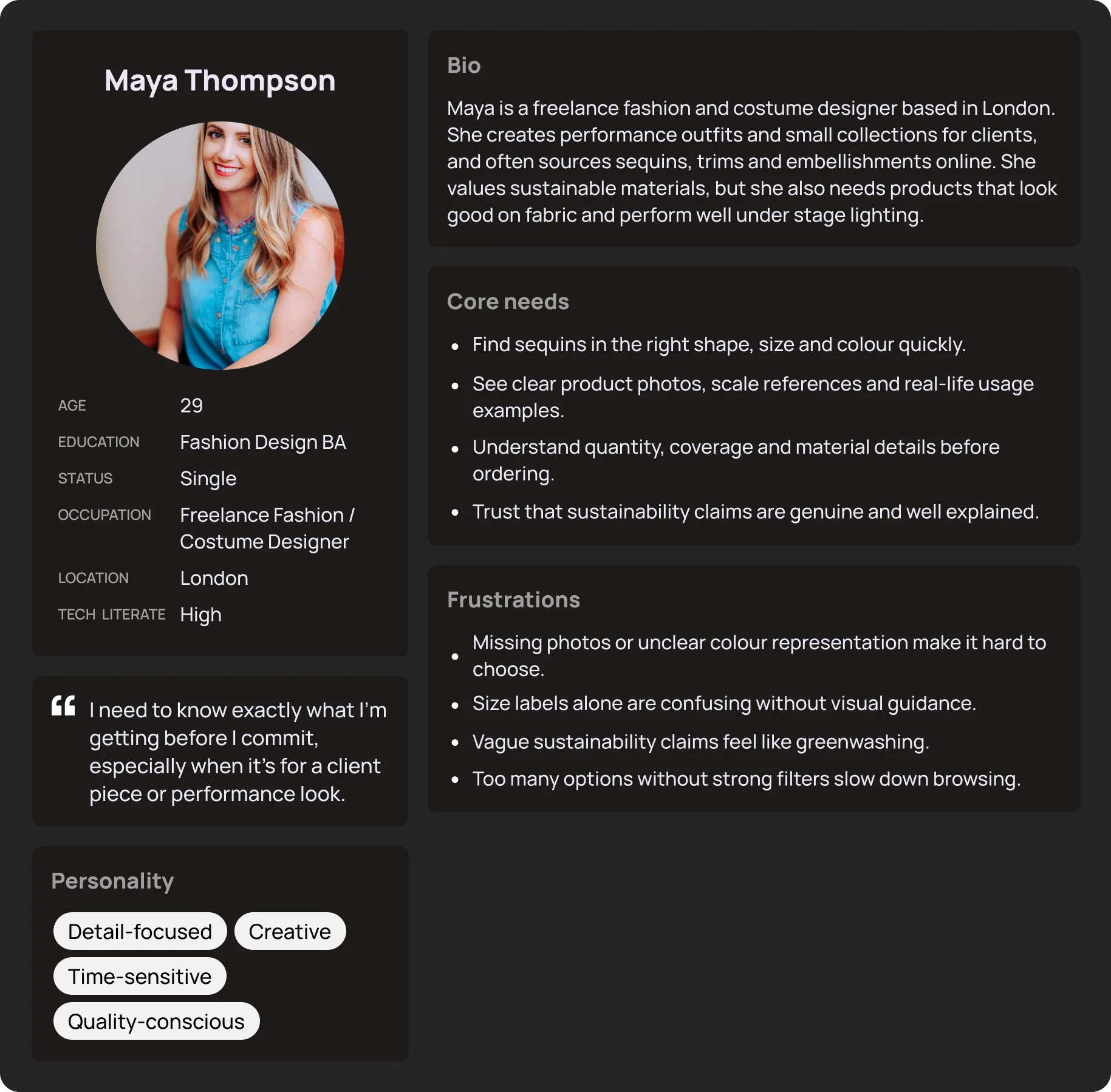
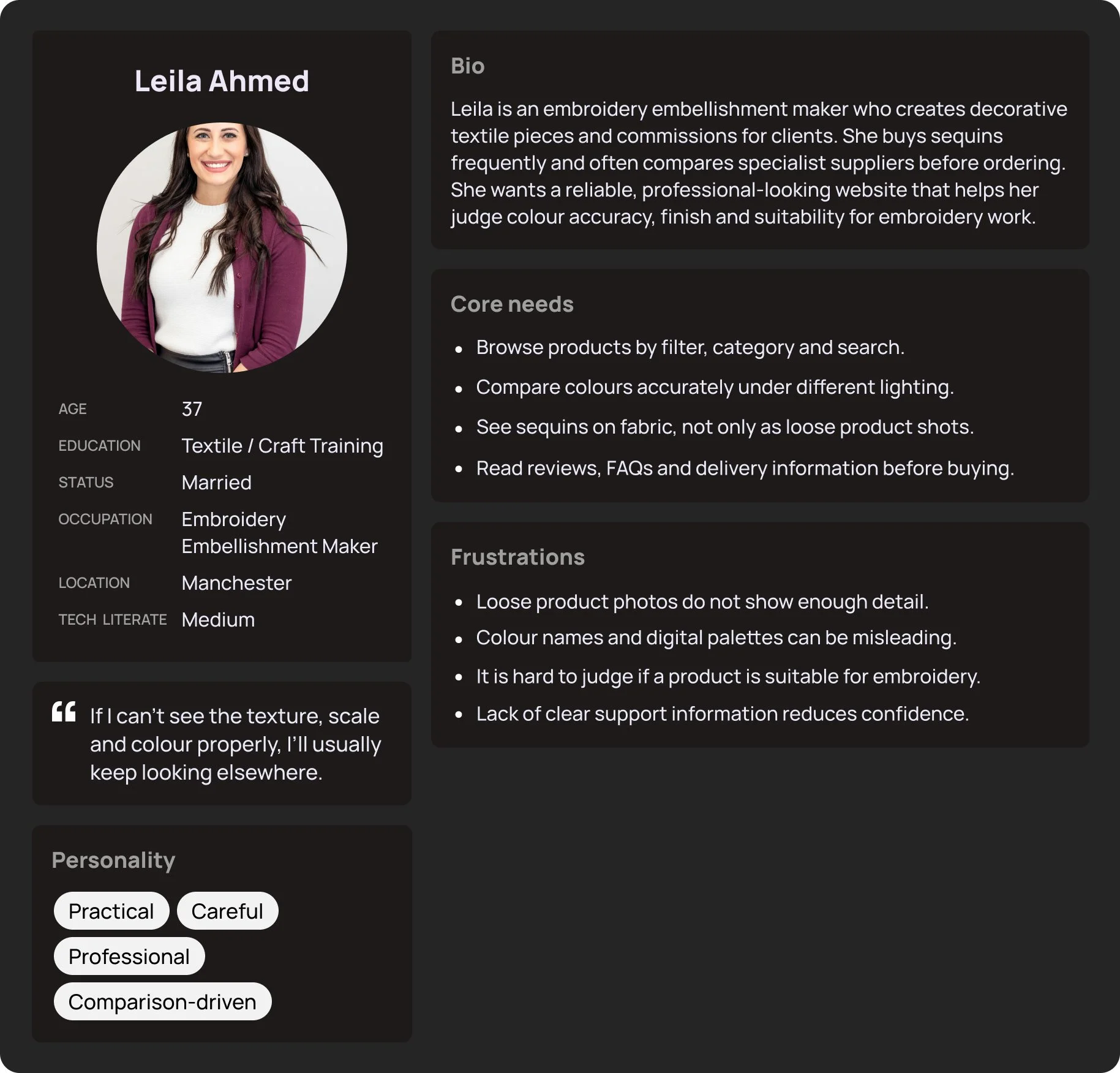
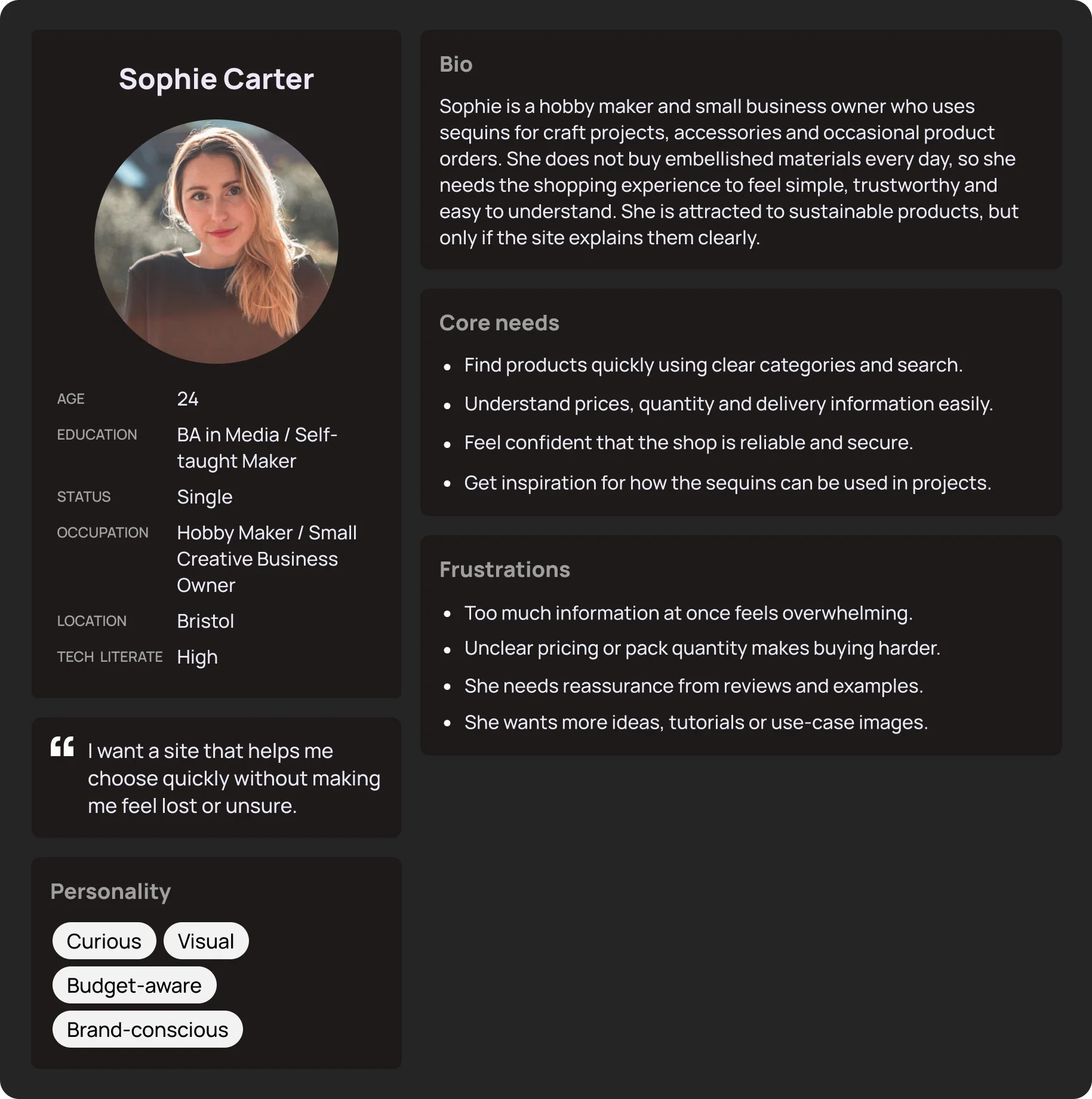
Research findings were synthesised through affinity mapping before being translated into an empathy map and three evidence-informed personas.
Defining the Problem
The core design problem became creating a shopping experience where specialist products could be discovered quickly, understood confidently and compared without overwhelming users, while making TSSC's sustainability credentials and expertise more visible.
Design Priorities
01 - Improve product discovery
Clearer categories, search, filters and navigation.
02 - Increase product confidence
Better imagery, sizing, quantities, colour selection and product information.
03 - Strengthen trust
Bring sustainability, the founder story, collaborations and credibility into the shopping journey.
04 - Reduce information overload
Prioritise essential information and progressively reveal supporting details.
Ideation
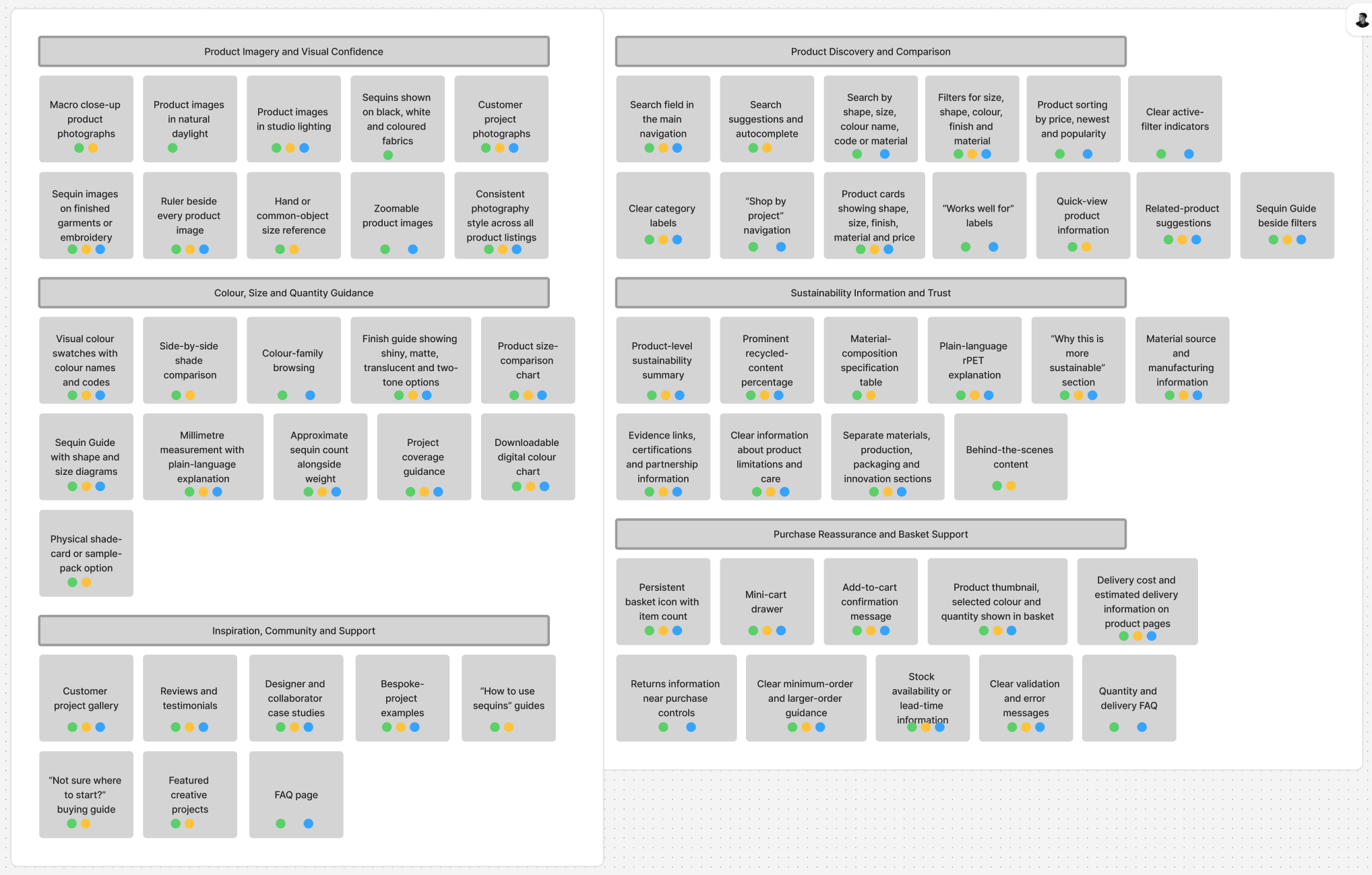
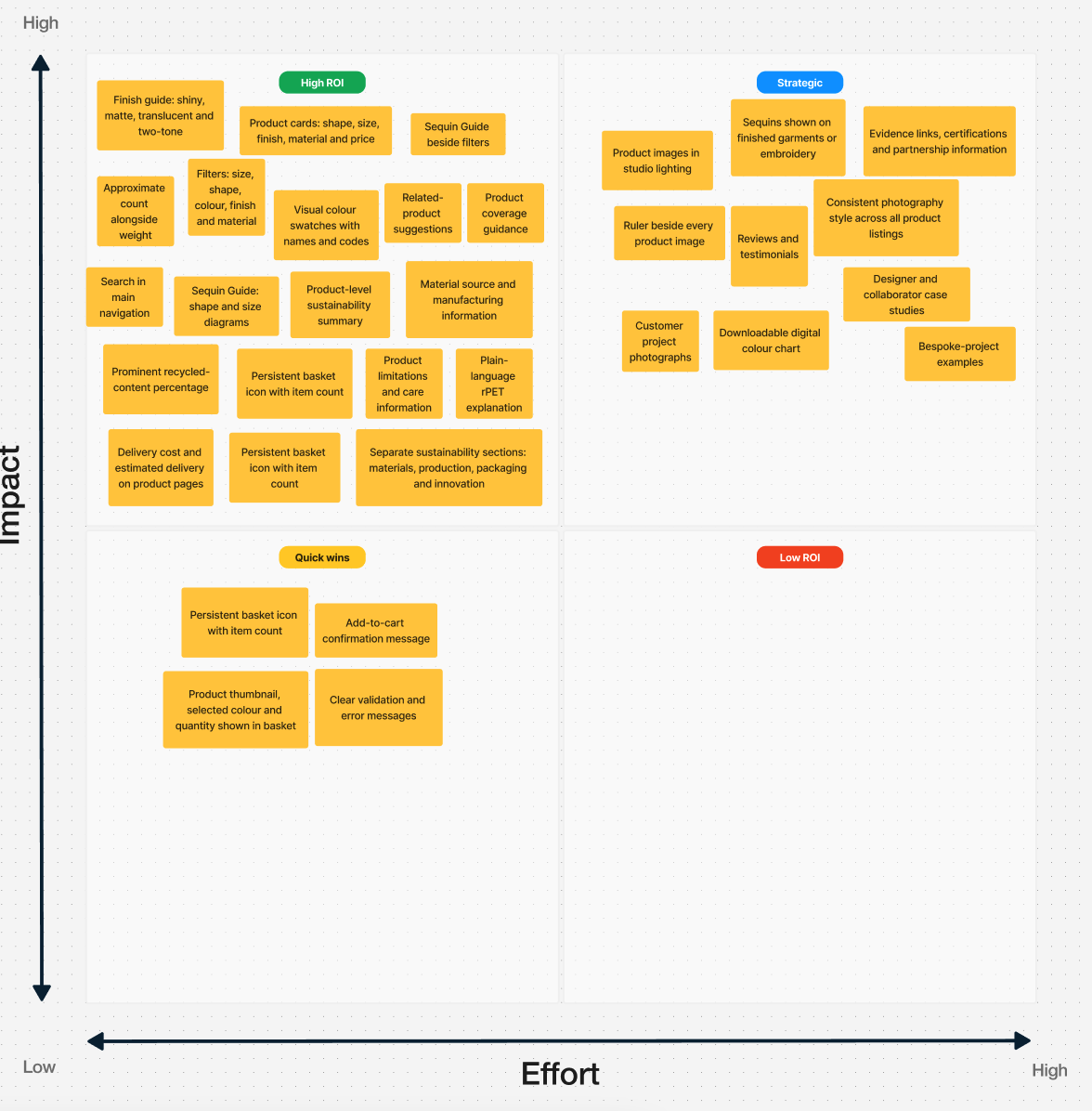
With the problems defined, I explored possible solutions through brainwriting, affinity diagramming, dot voting and an impact-effort matrix.
Information Architecture
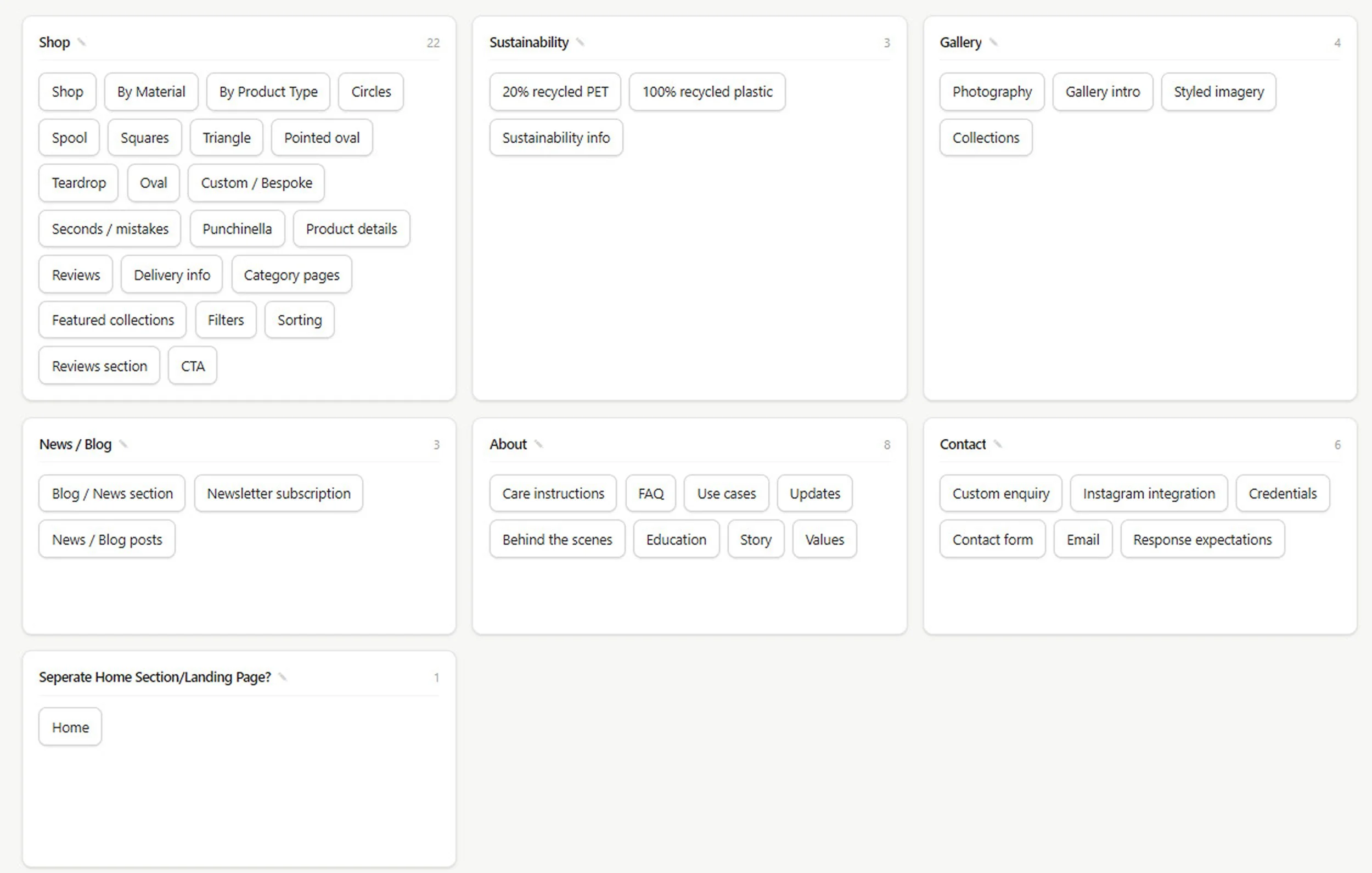
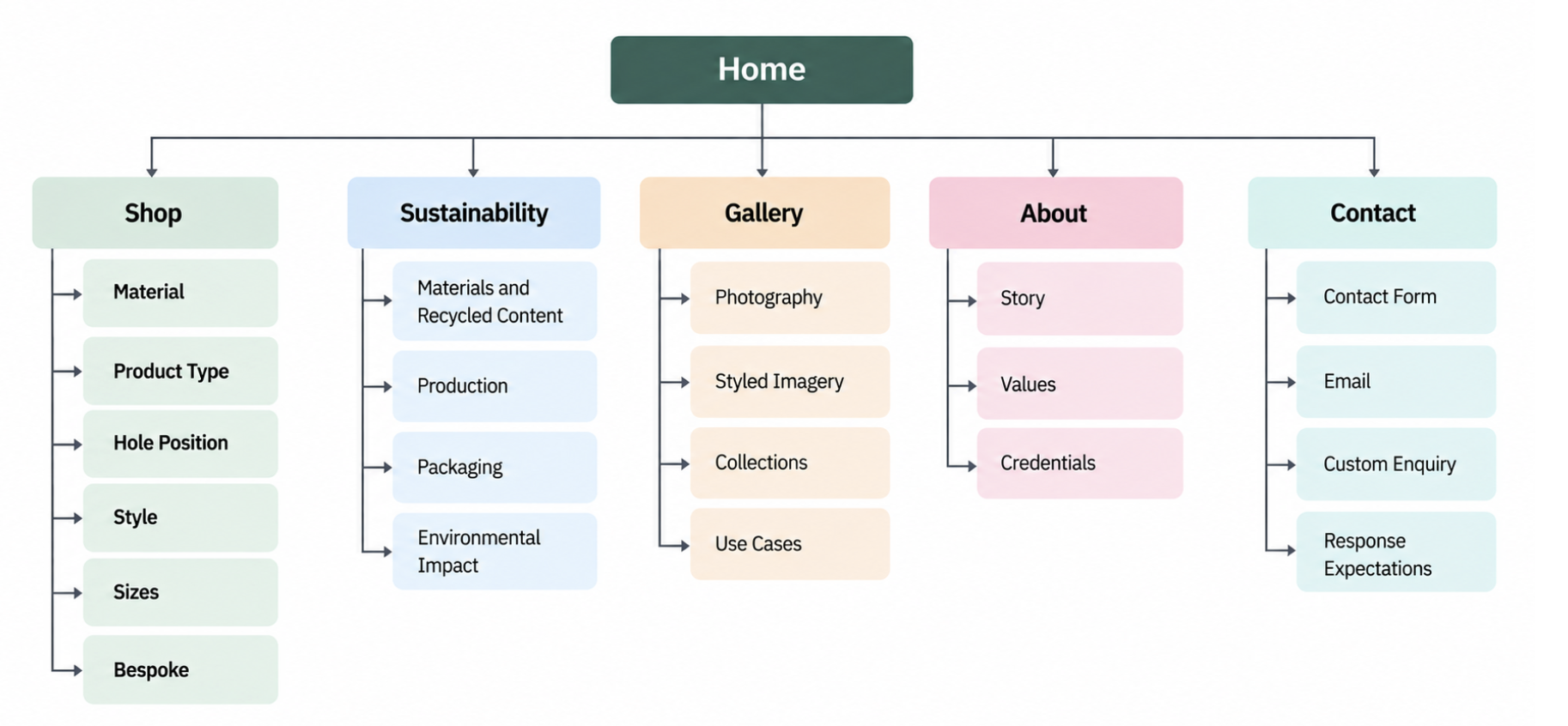
The existing navigation contained overlapping terminology and made browsing a large specialist catalogue unnecessarily difficult. I developed a new information architecture organised around how customers actually search for sequins, including product type, material and relevant product attributes.
The proposed structure was then validated through card sorting before being refined into the final navigation.
From Research to Interface
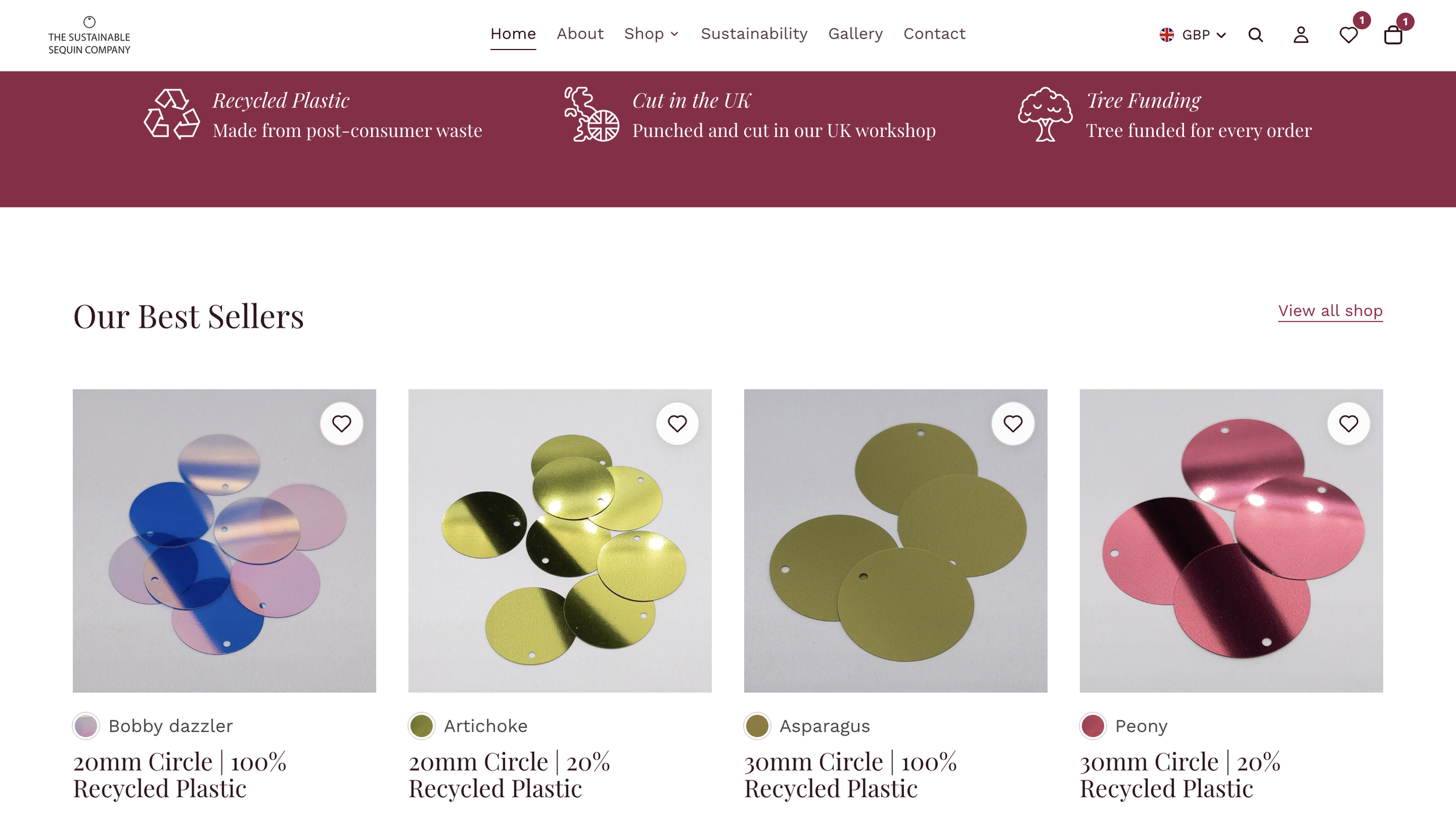
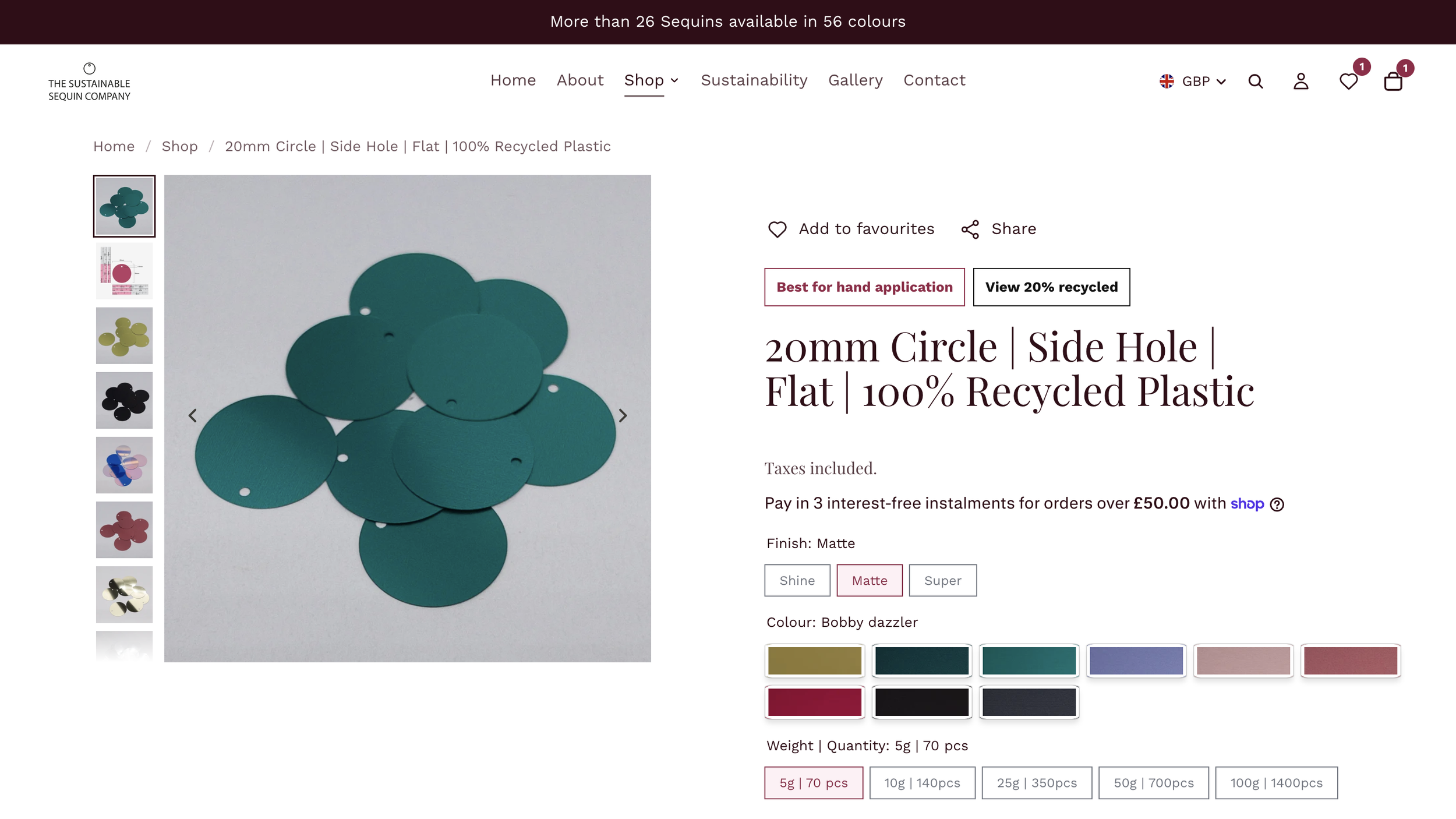
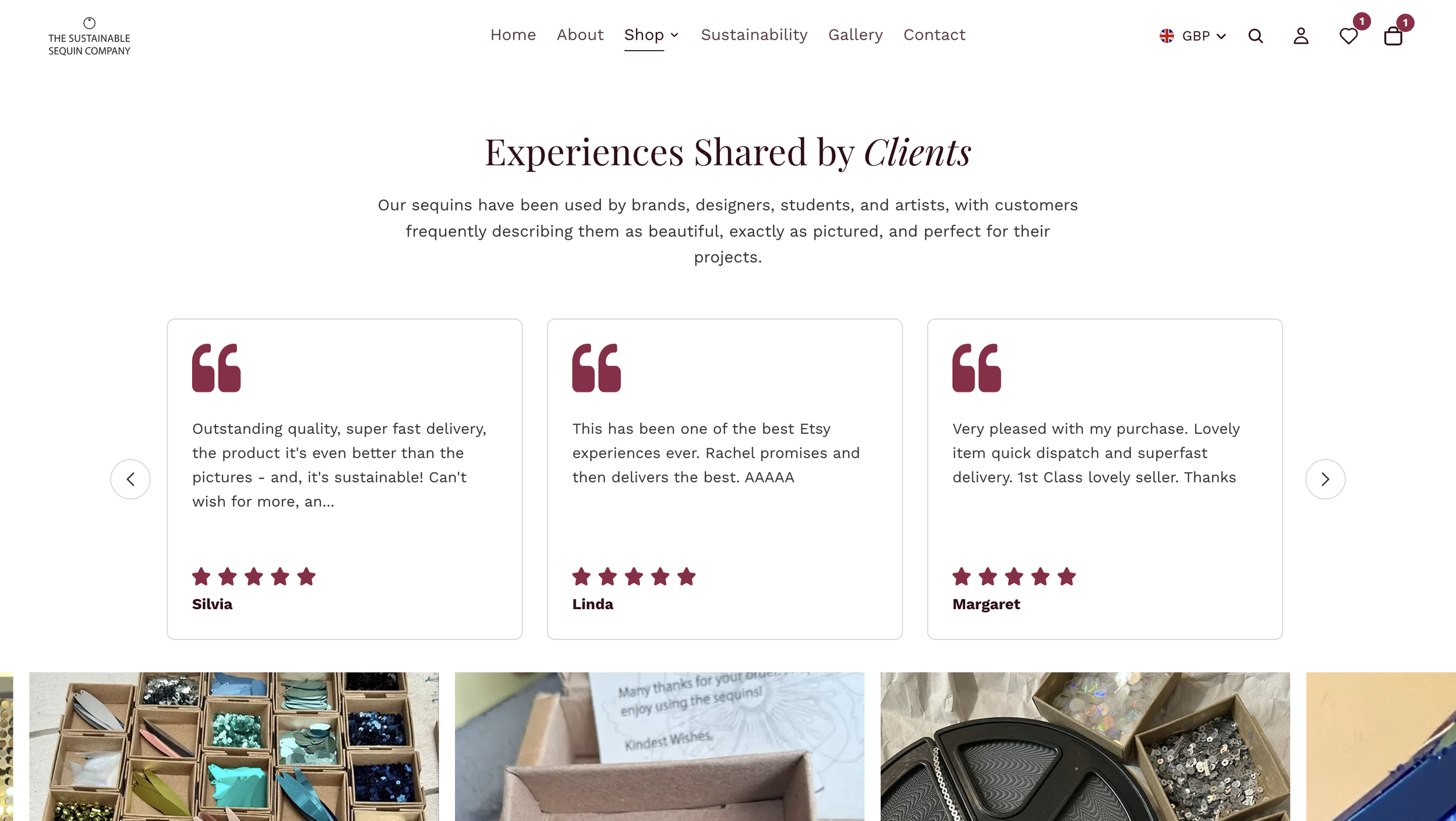
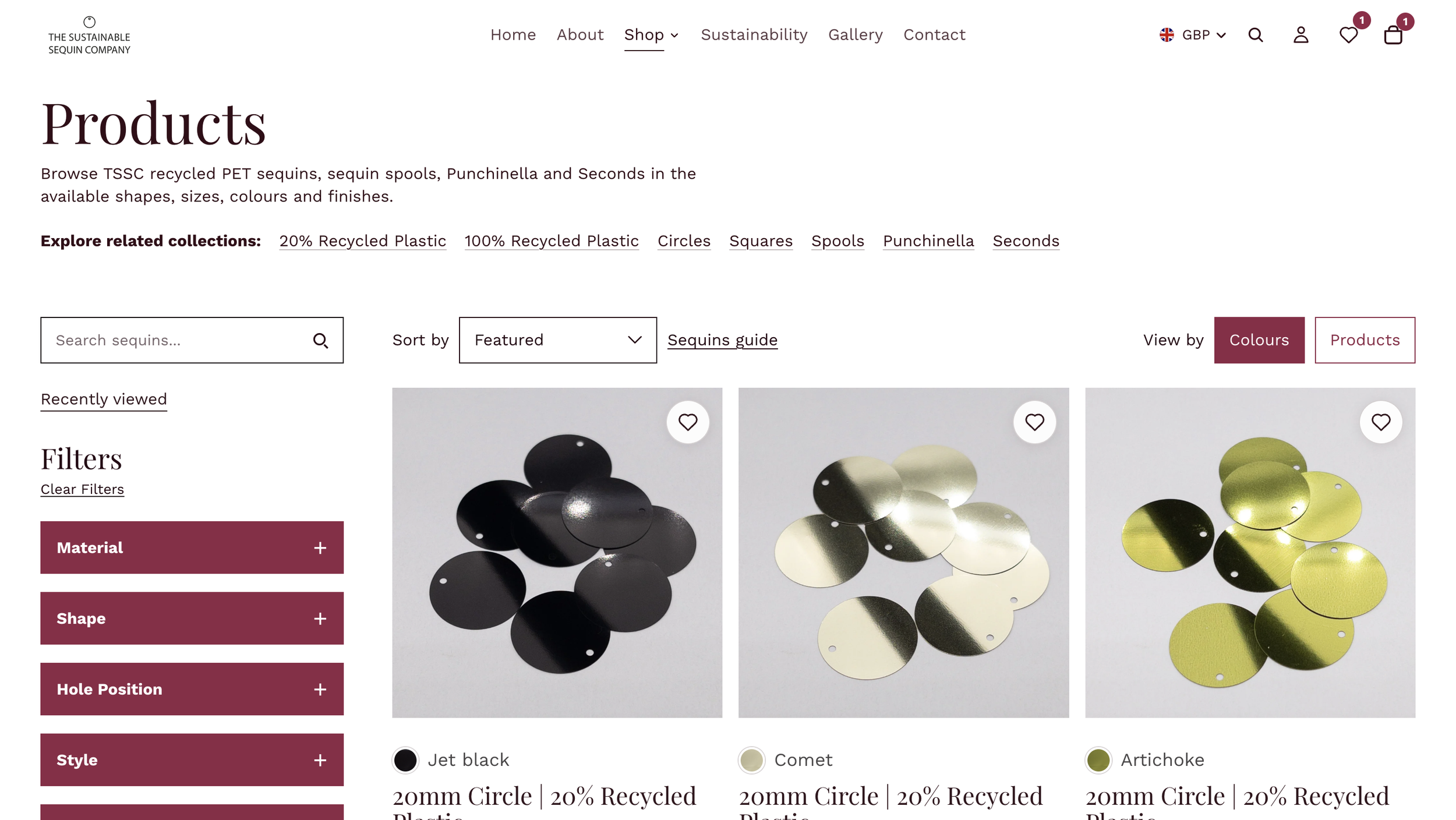
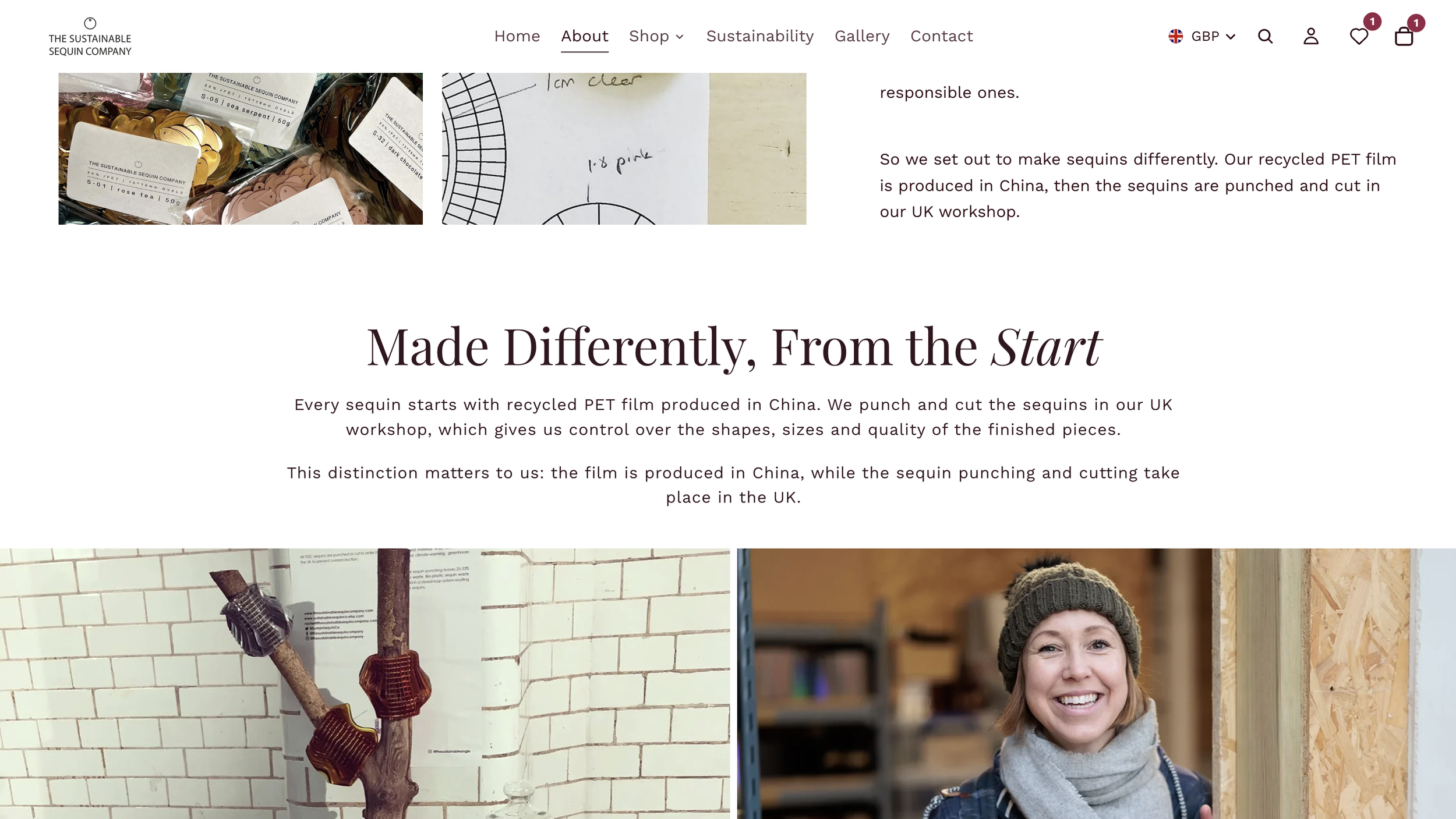
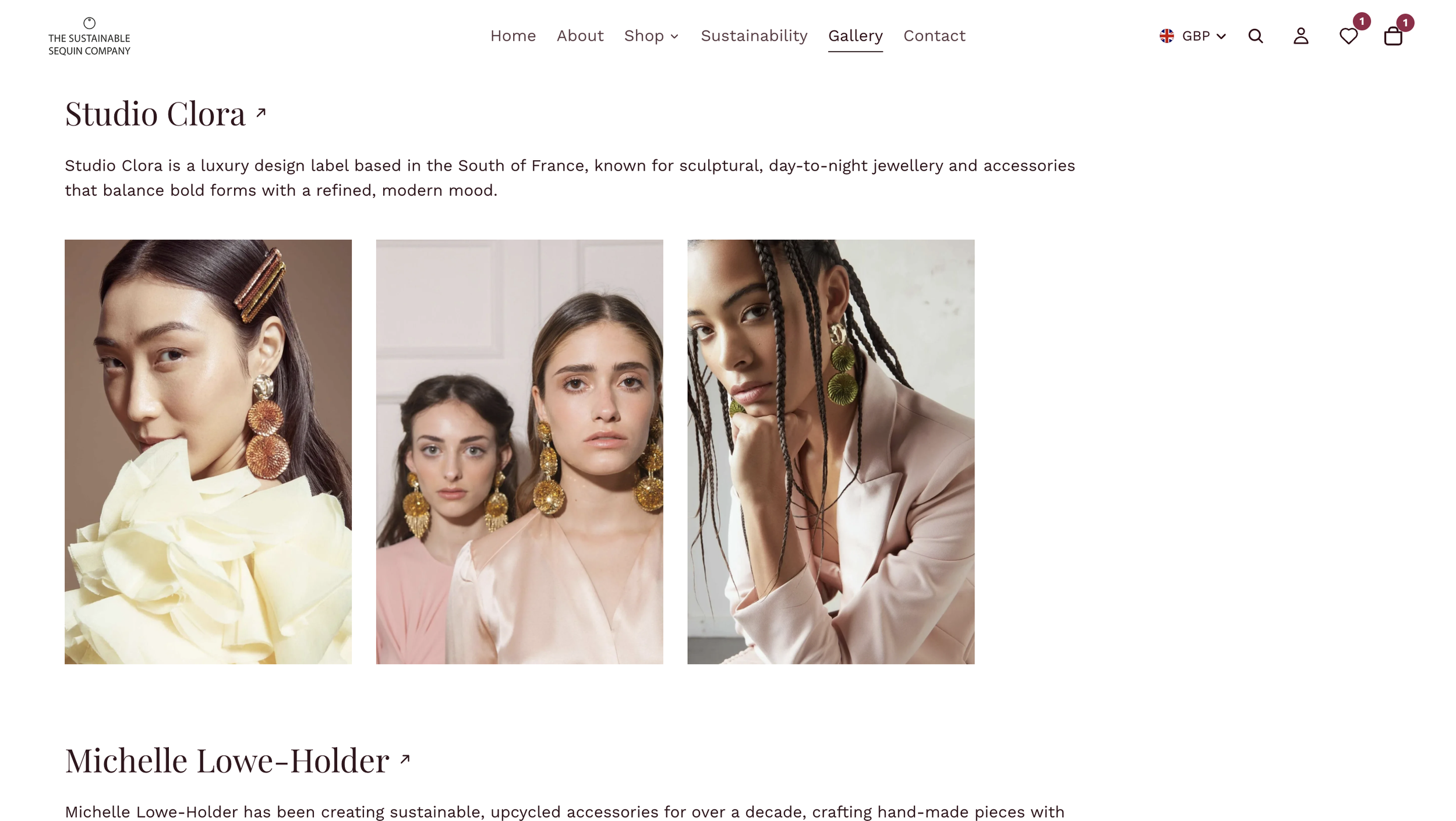
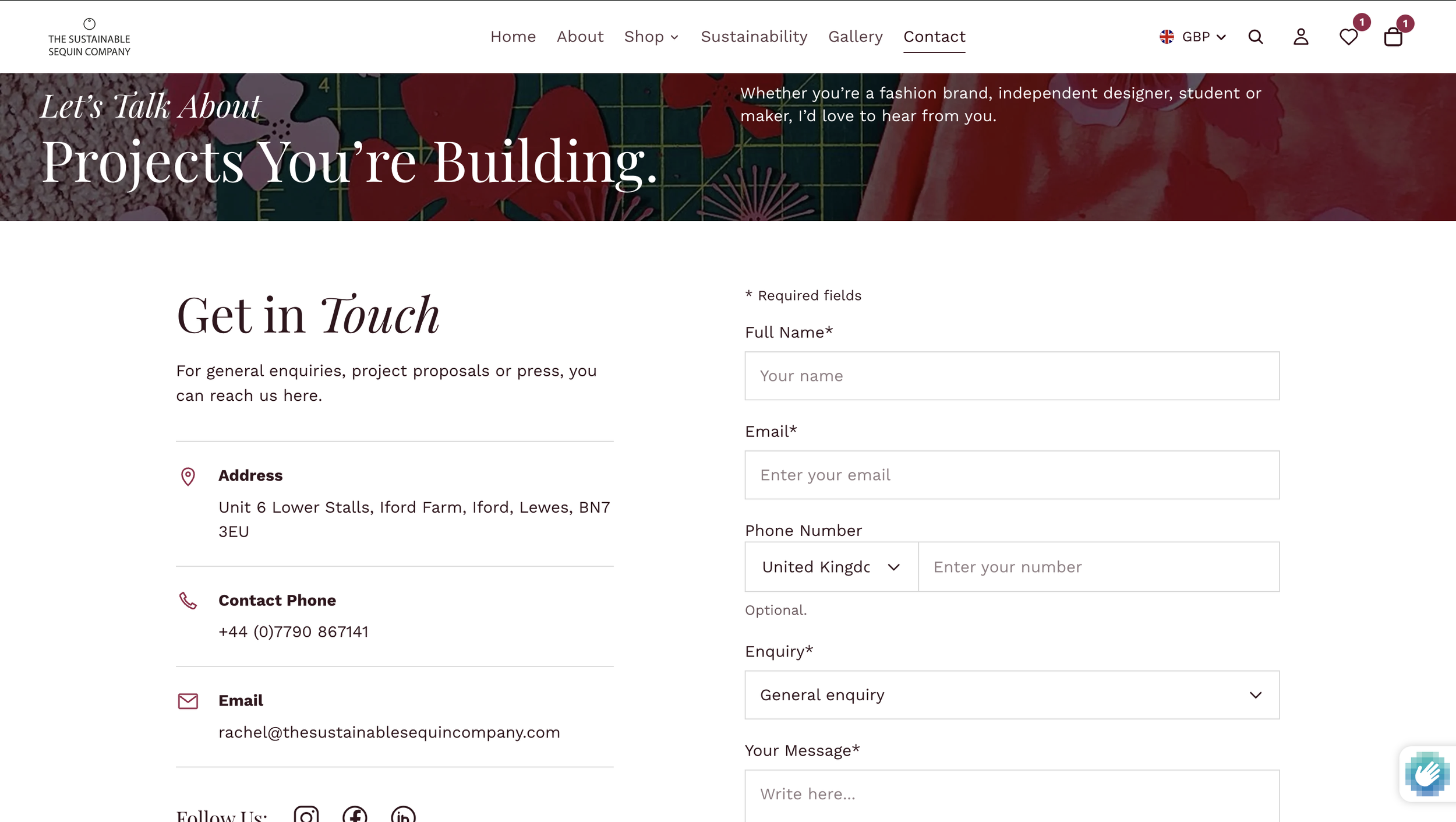
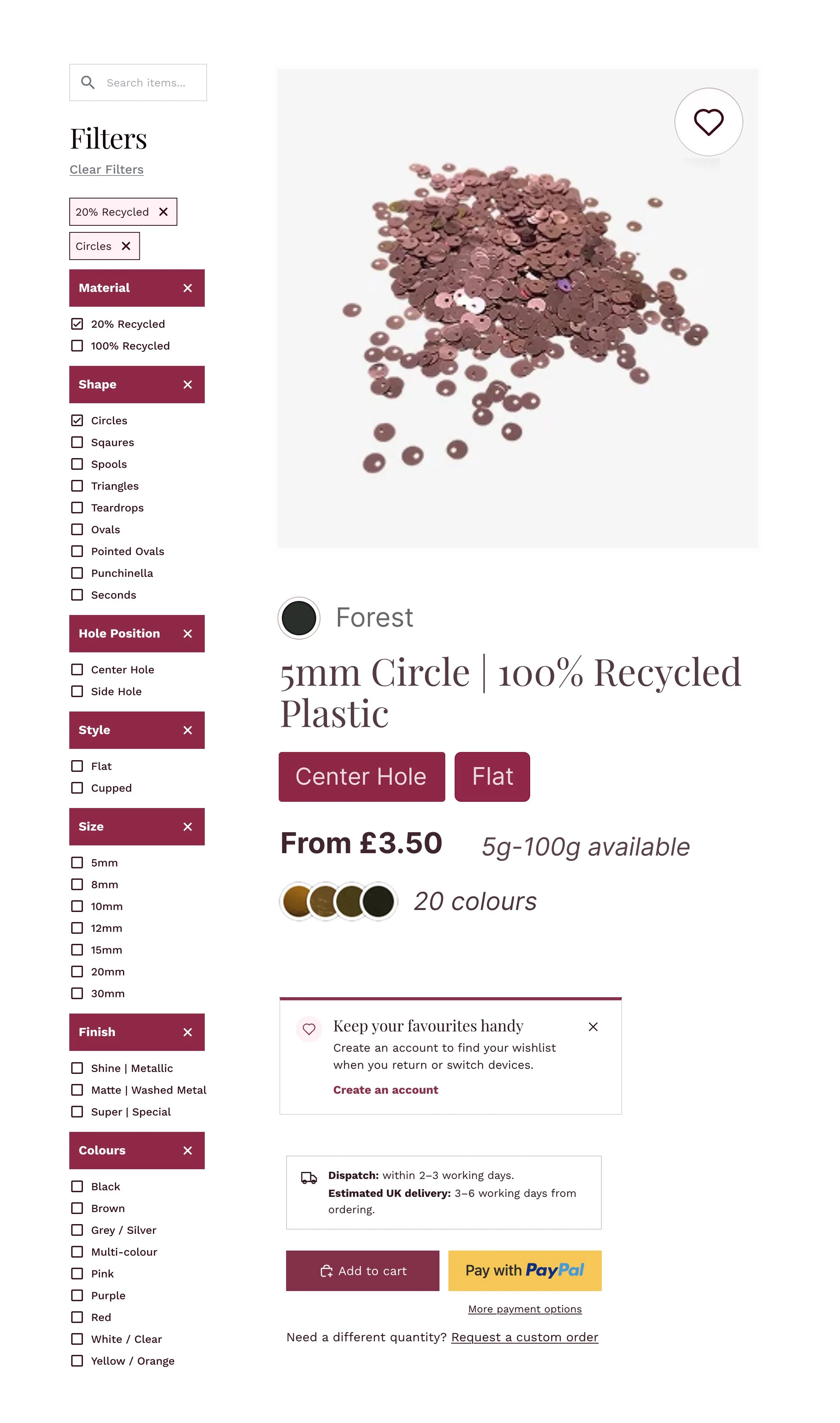
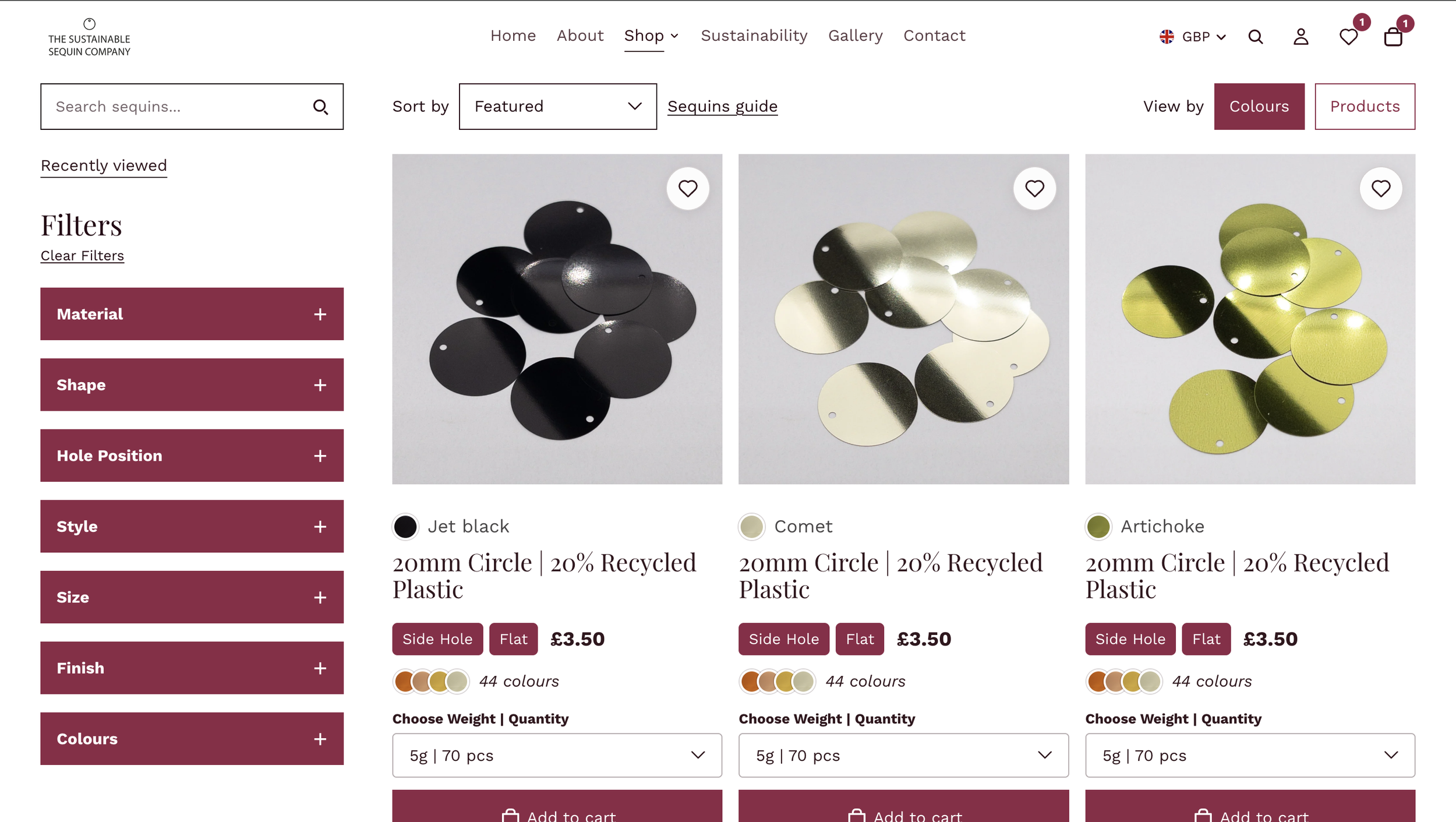
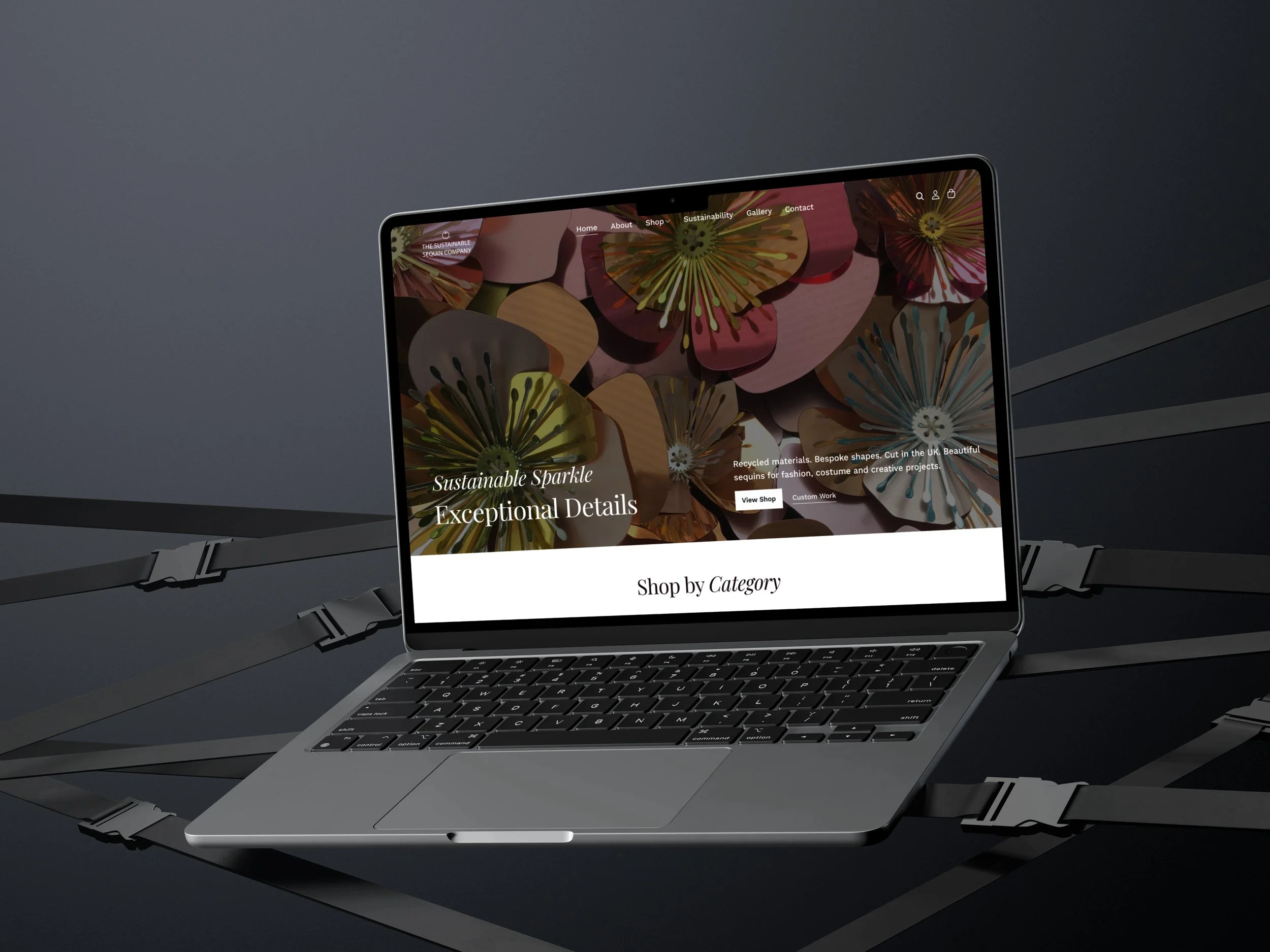
The interface translated the research into a visual system focused on clarity, product imagery and simple navigation while retaining TSSC's distinctive brand identity.
Particular attention was given to the relationship between product photography, colour selection, filtering, product information and sustainability content.
Testing & Iteration
The prototype was evaluated through two rounds of usability testing, allowing design decisions to be tested against real behaviour rather than assumptions.
Testing focused on whether users could navigate the store, discover relevant products, understand product information and complete key shopping tasks confidently.
Findings from the first round informed revisions before a refined prototype was evaluated again.
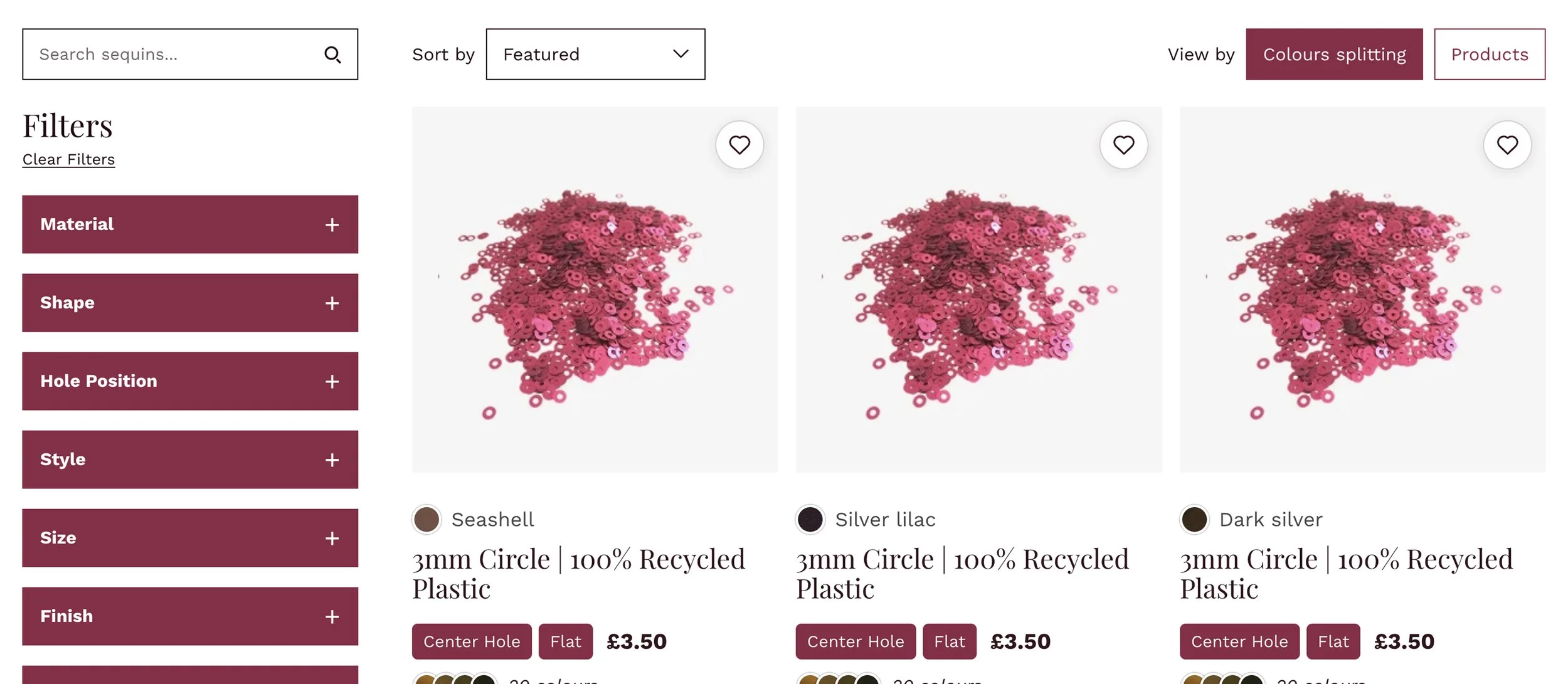
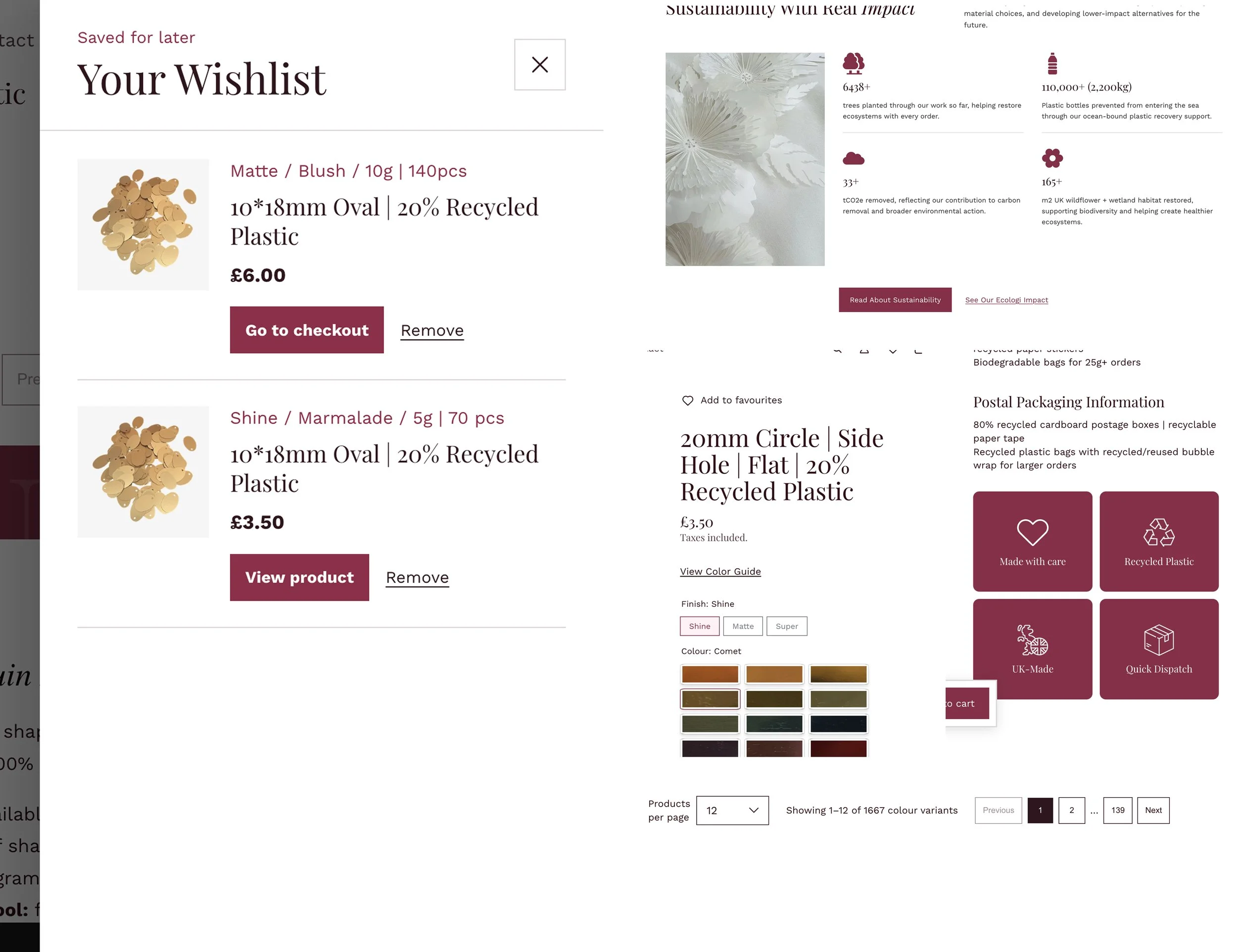
Round 1 → Identify Friction
Initial testing highlighted areas where navigation, product information and interactions still created hesitation.
Changes focused on improving clarity, reducing unnecessary complexity and strengthening visual hierarchy.
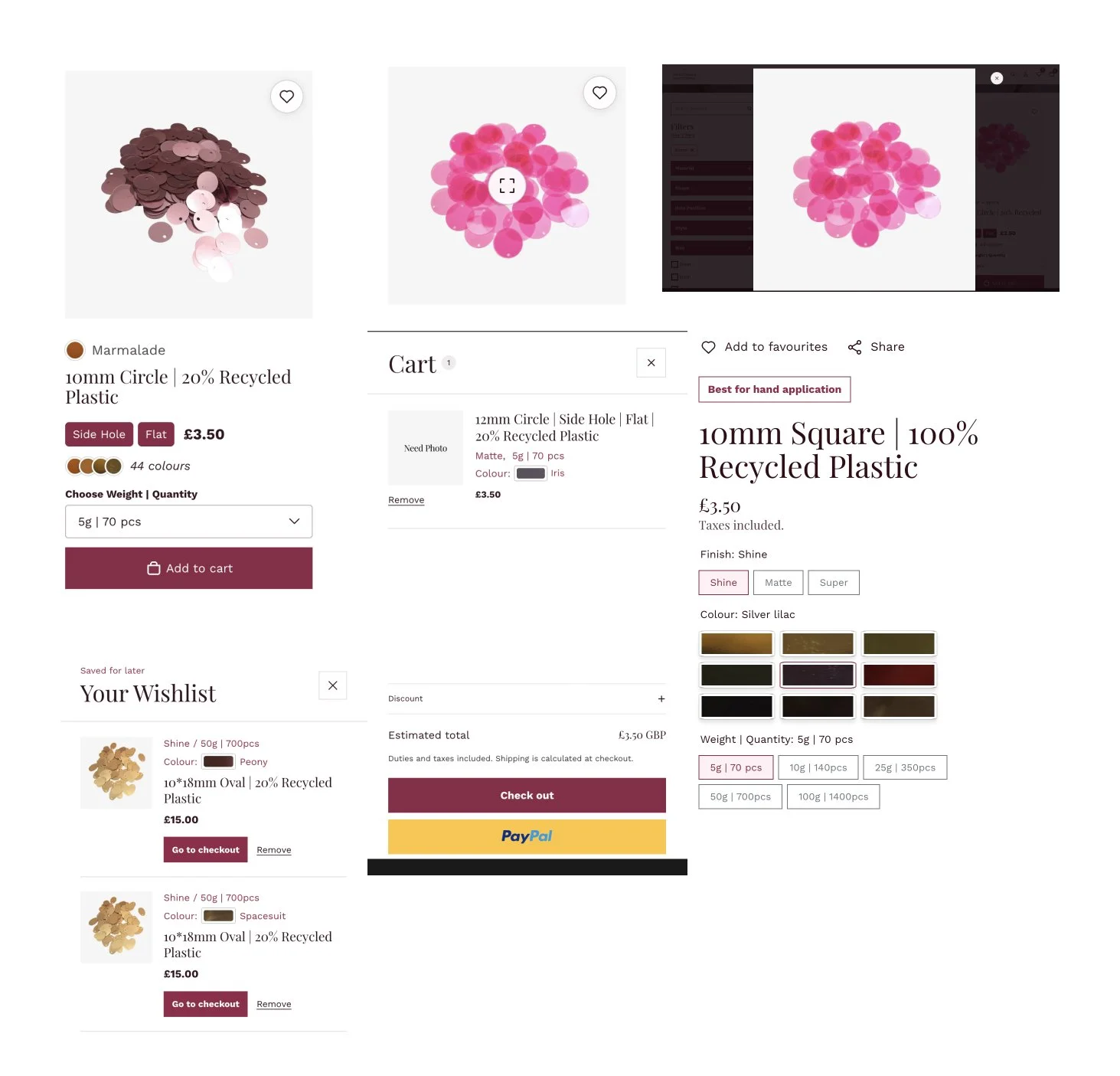
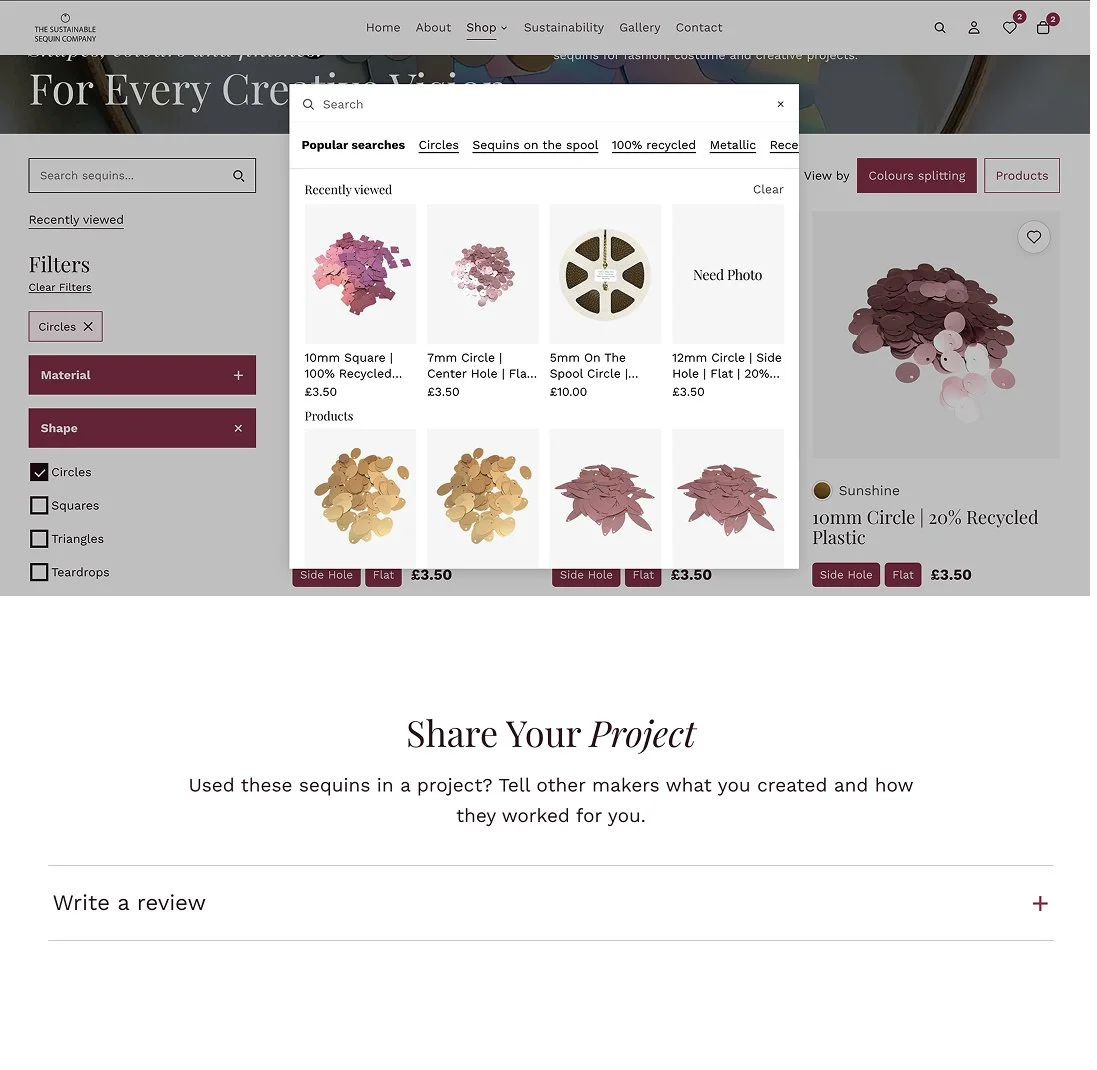
Round 2 → Validate the Refined Experience
The second round evaluated the revised prototype and identified the remaining areas requiring refinement before implementation.
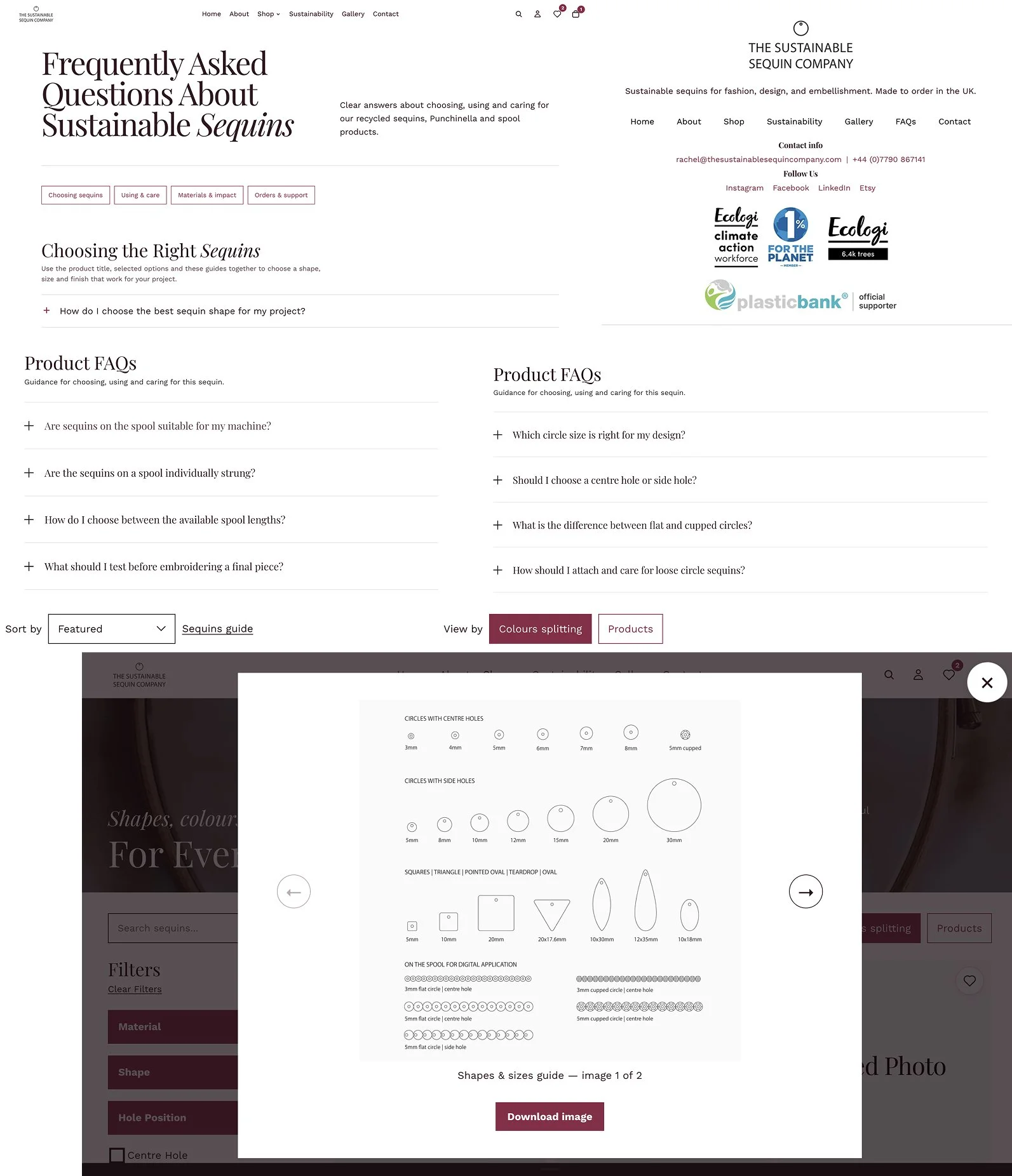
Beyond the Interface
Building the store required designing not only what customers see, but how the business operates behind it.
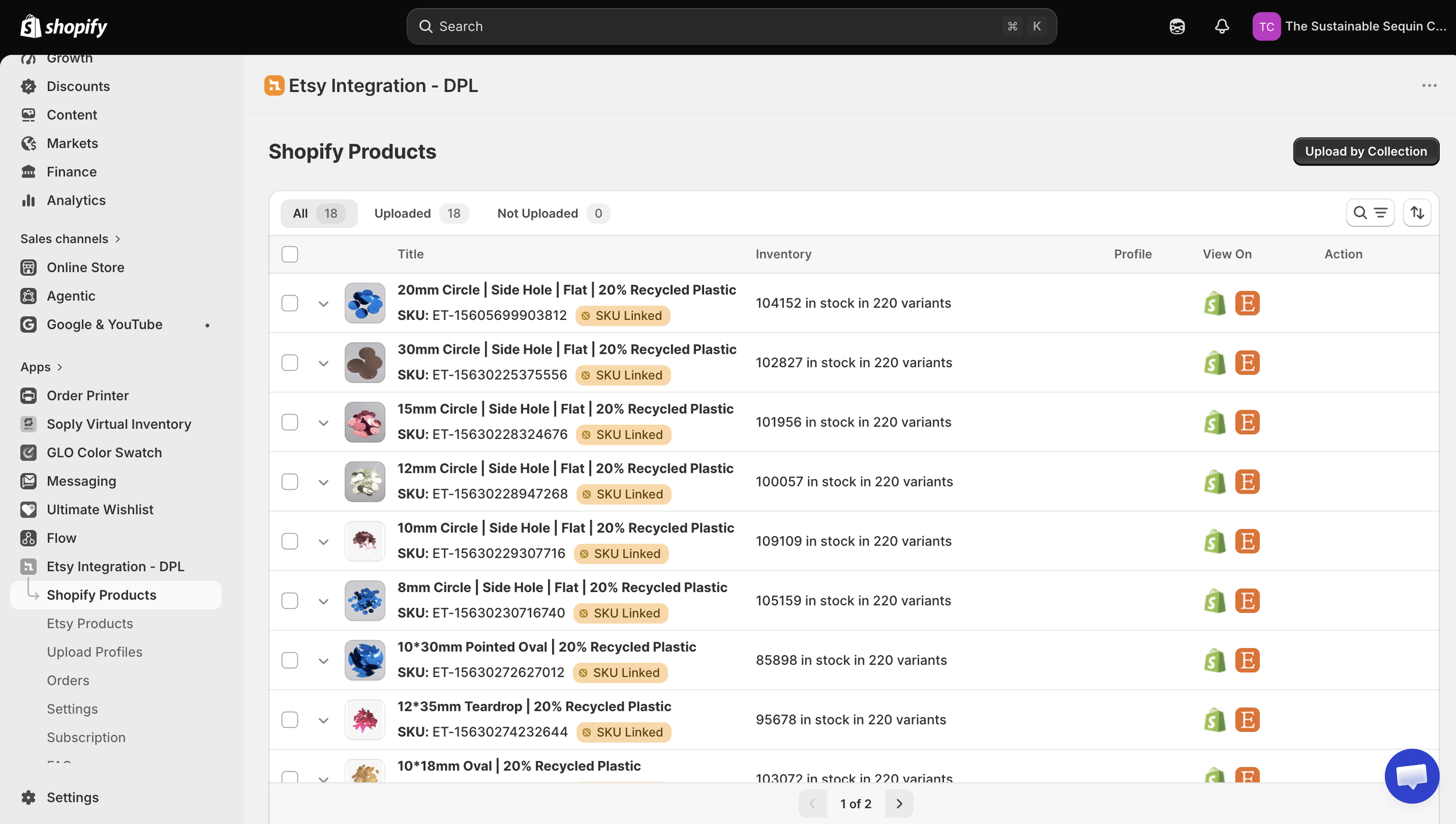
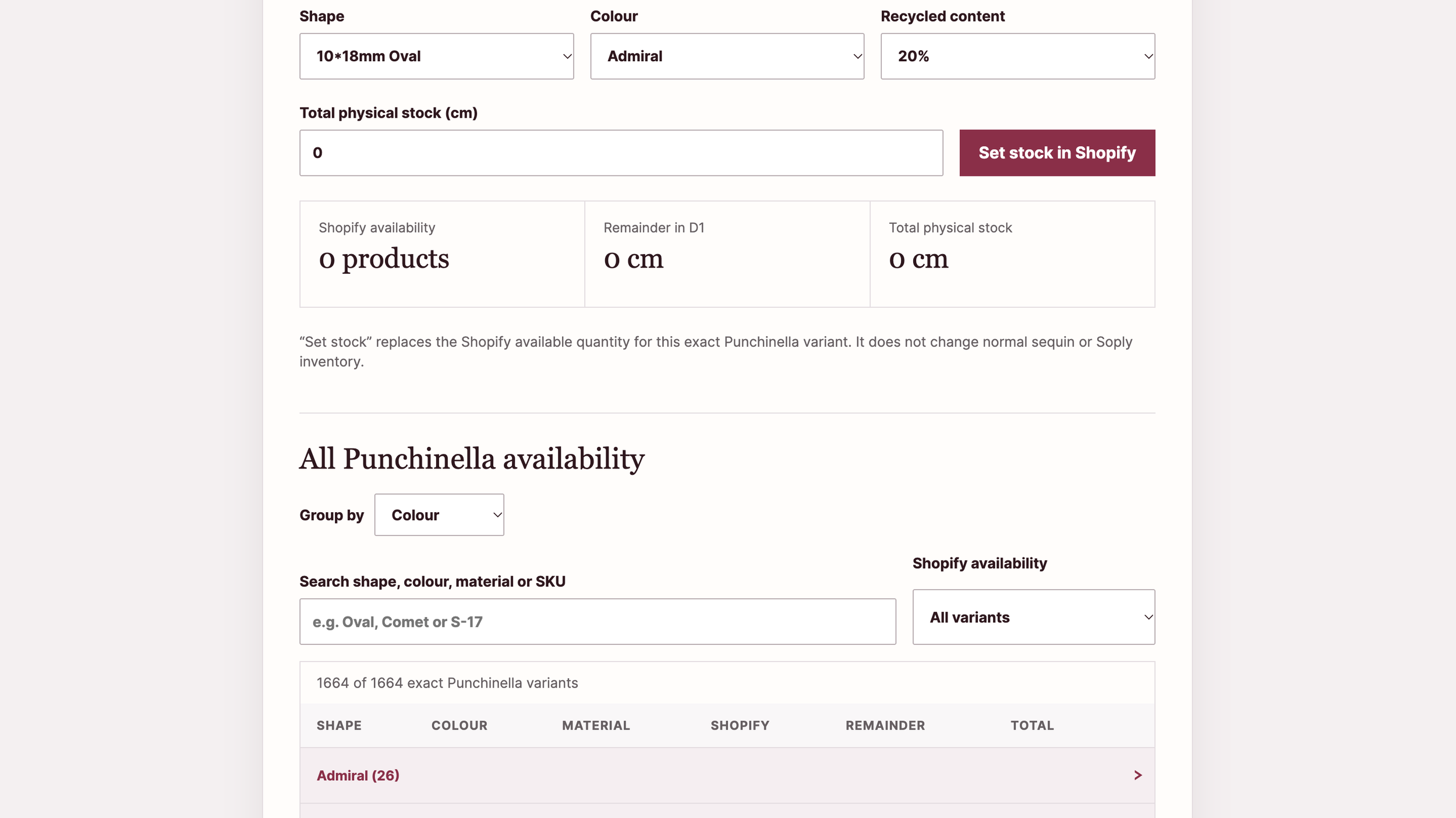
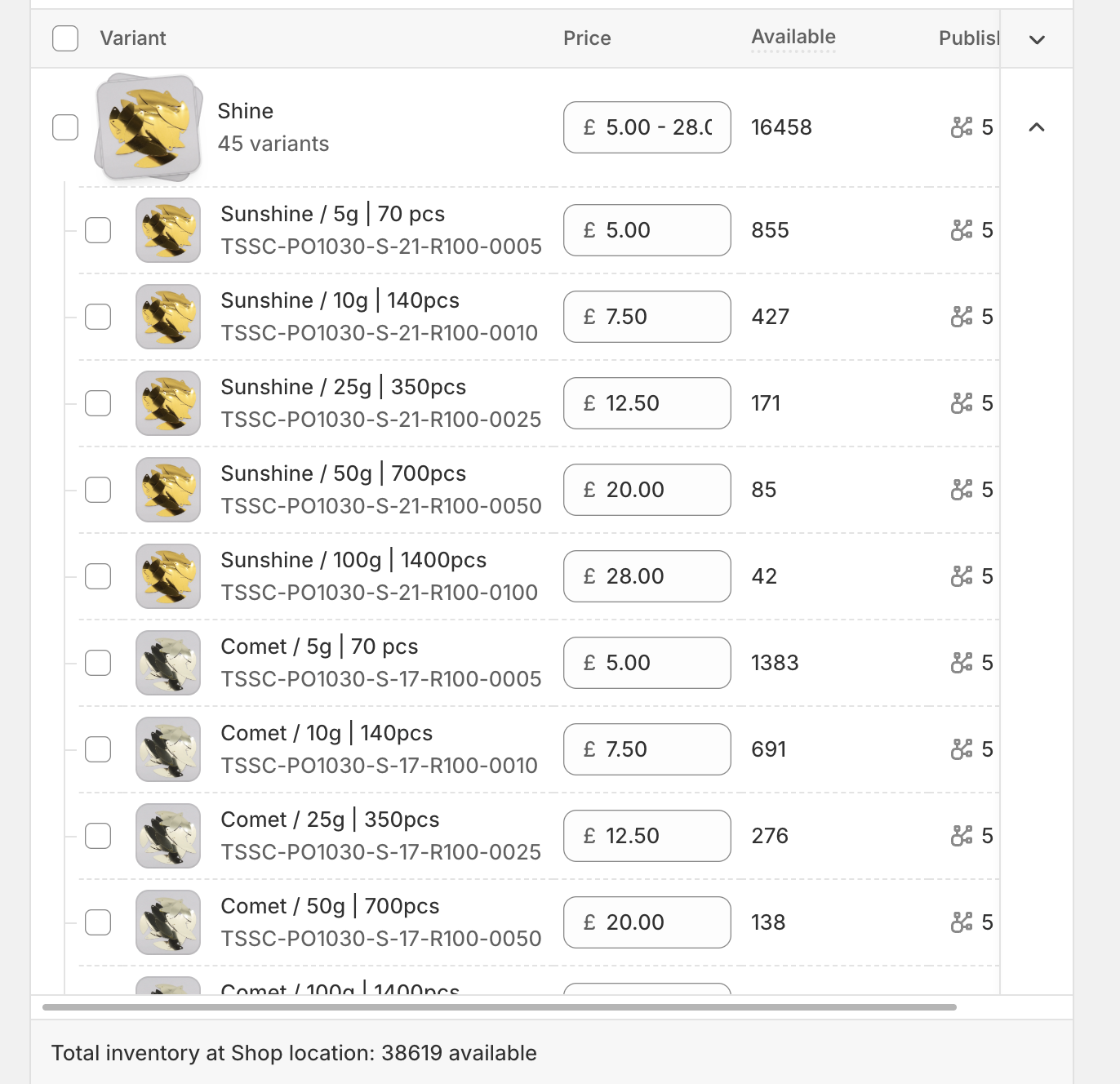
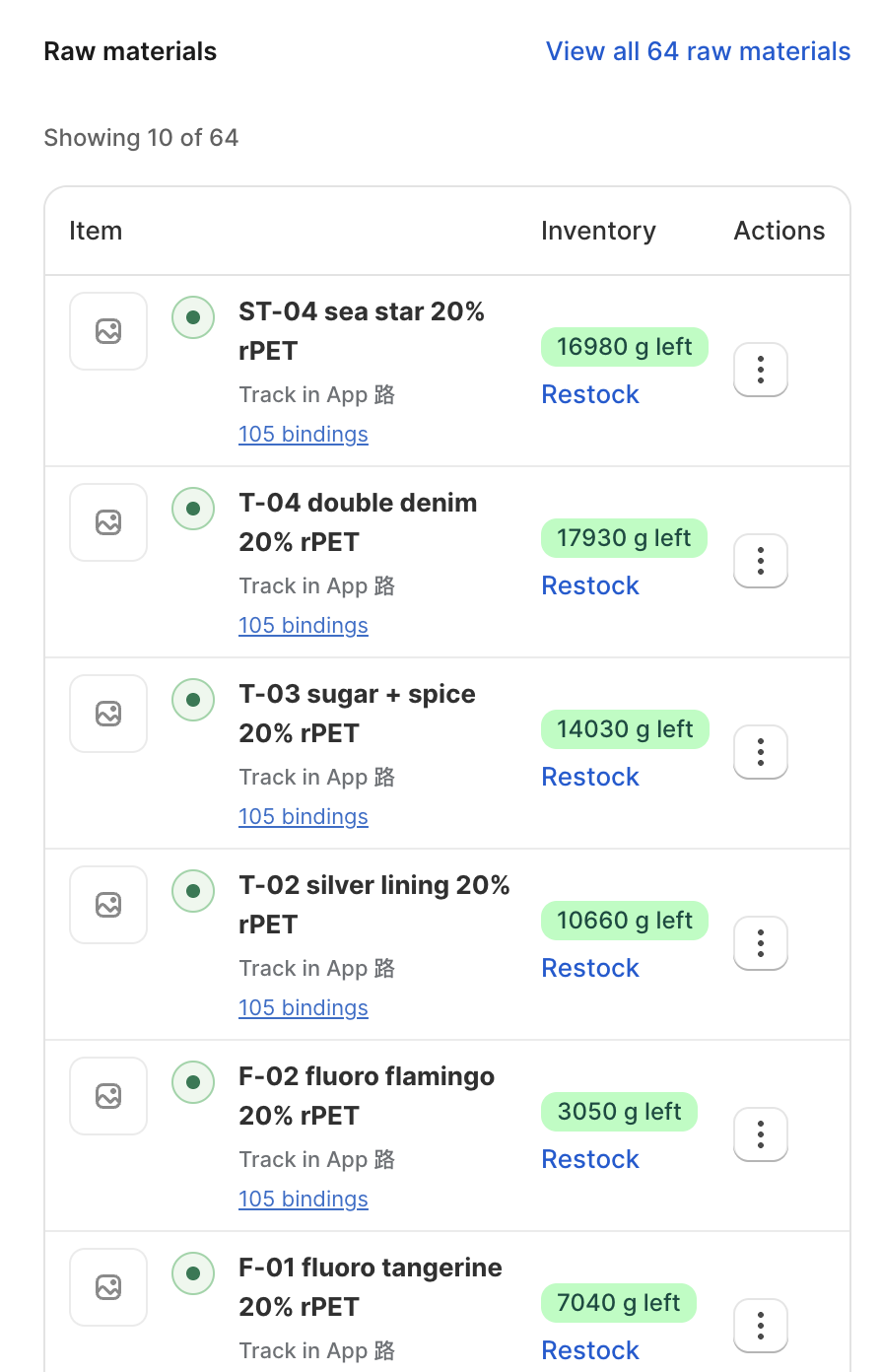
Inventory & Product Structure
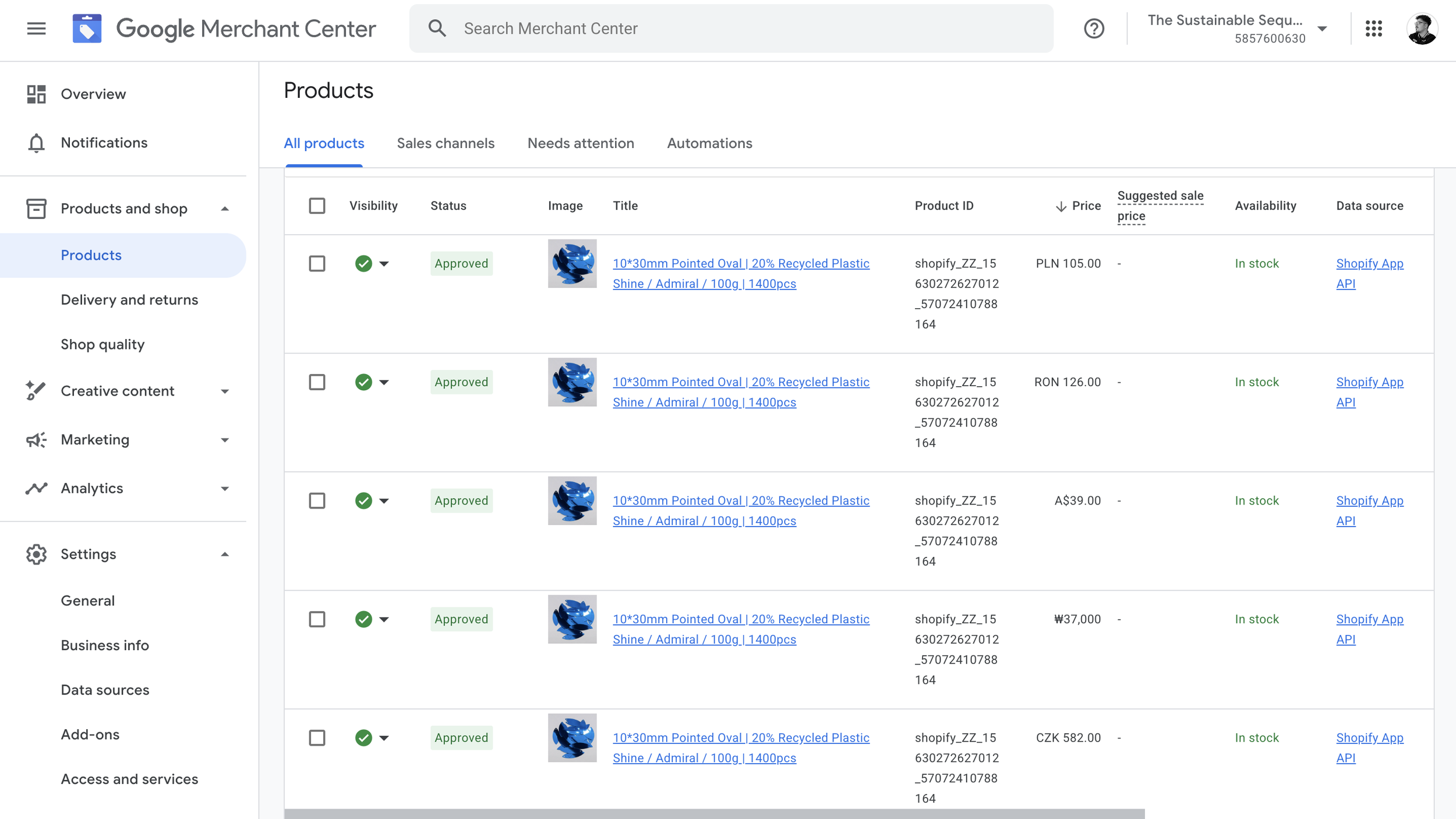
The Shopify catalogue was configured to support TSSC's unusually complex product structure, including multiple colours, shapes, sizes, finishes, quantities and material types.
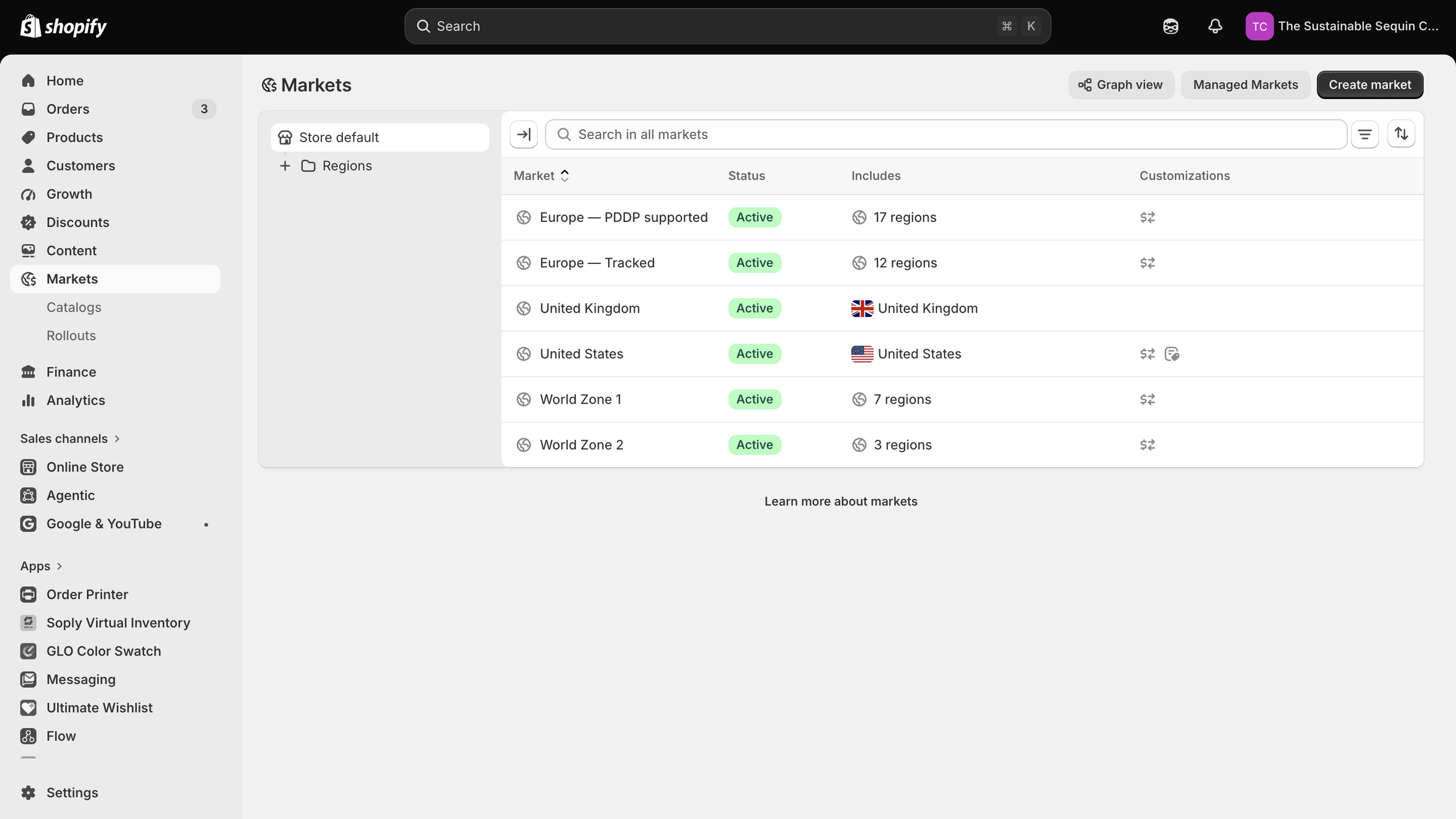
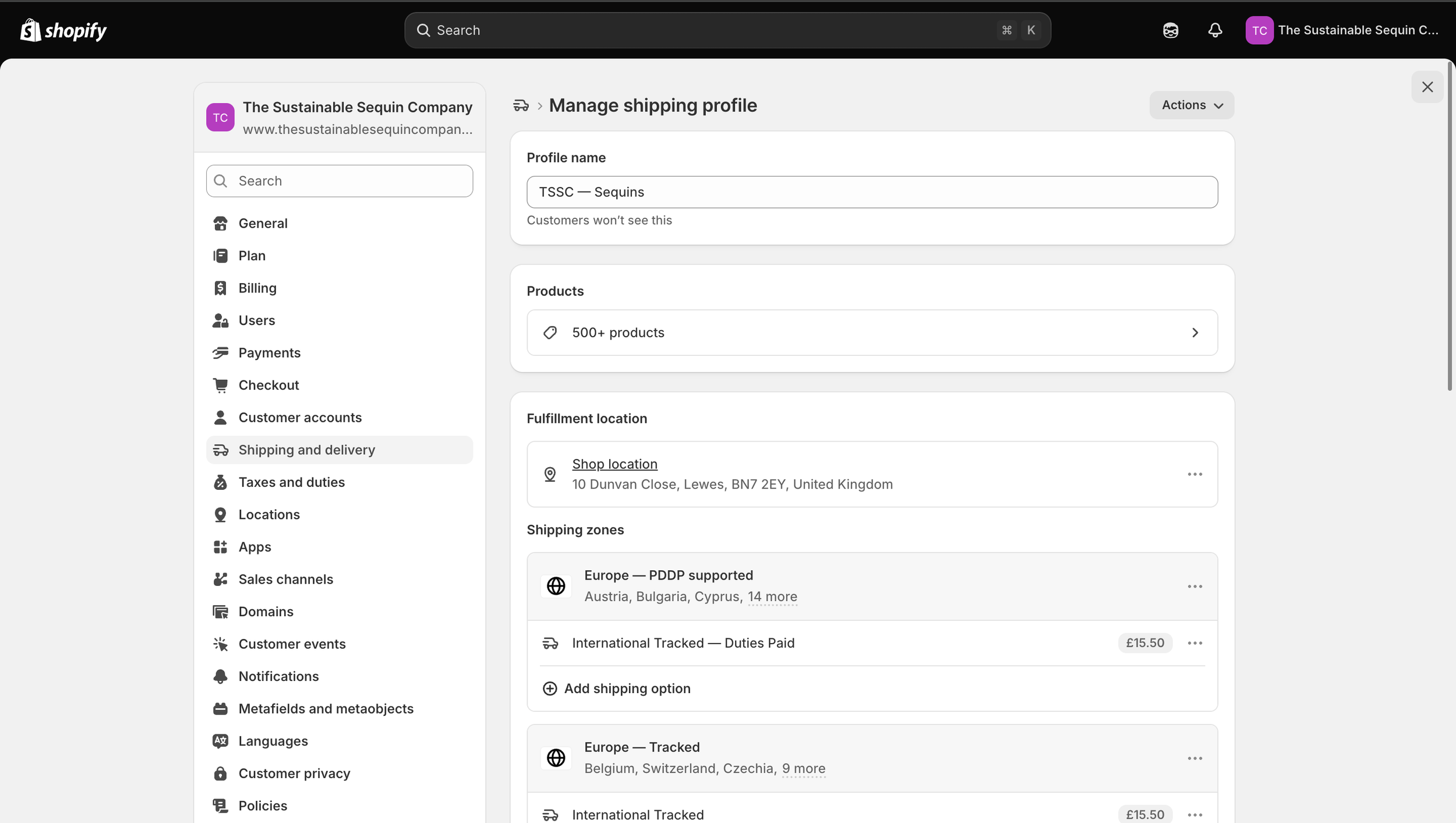
Shipping & International Markets
Shipping and market configuration were developed to support customers beyond the UK while presenting appropriate delivery options.
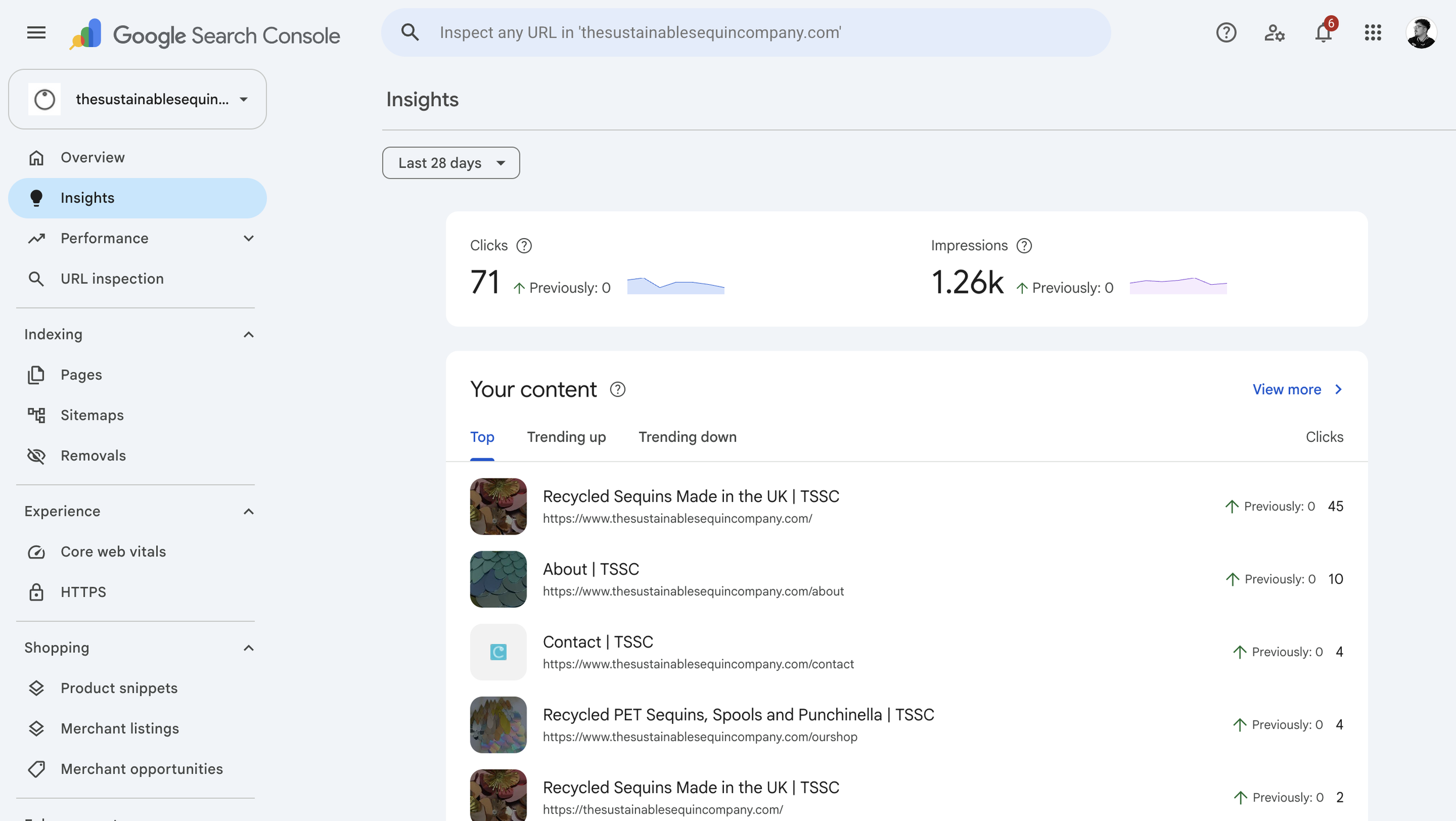
Search Visibility
The launch also included SEO and search-engine configuration so the redesigned experience could be discovered through search rather than functioning only as an isolated website.
Impact
The project transformed TSSC's website from an experience with significant product-discovery and information barriers into a research-led e-commerce platform designed around how customers actually browse and evaluate specialist products.
Key Outcomes
📈 Redesigned the complete customer journey from discovery through purchase.
📈 Introduced clearer product discovery, navigation and information architecture.
📈 Improved how product size, colour, quantity and sustainability information are communicated.
📈 Validated the experience through two rounds of usability testing.
📈 Translated the final UX/UI design into a functioning Shopify store.
📈 Integrated inventory, shipping, international markets and search visibility into the final solution.
What I Learned
TSSC taught me how different designing a real e-commerce system is from designing an isolated interface.
User research helped uncover problems that were not obvious from the interface alone, particularly around product confidence, sustainability communication and how specialist customers evaluate materials.
The project also reinforced the importance of carrying UX decisions through implementation. Decisions around navigation, product variants, filtering and product information had direct consequences for Shopify's catalogue structure, inventory management, shipping and SEO.
Most importantly, the project strengthened my ability to work across the entire product lifecycle: researching a problem, defining user needs, designing and testing solutions, implementing them within technical constraints, and launching the final experience.
“Amine have done a great job in very short period of time. All my preferences and ideas were put together in perfect way and beautiful website.”
Kateryna Sierova - Photographer


“I am thrilled to share my experience working with an outstanding web designer Amine From the moment I engaged their services, I knew I was in capable hands. Their expertise in web design is unparalleled, and I could not be more pleased with the results.”
Sheikh Adiat - SMMA Agency
“Absolute pleasure working with Amine. Great communication, a driven developer and excellent service delivered consistently.”
Joshua Romao - Agency Owner

CONTACT US
CONTACT US
Have a design project in mind? Send me a message, and I’d be thrilled to discuss it with you! I’m excited about new challenges and look forward to connecting!